Skin Longevity: What Does It Actually Mean for Your Skin?
Skin longevity is one of beauty's biggest shifts in 2026. But is it just a new name for anti-ageing — or is there more to it?
NOUI Collective Editorial · · 8 min read
Skin longevity is one of beauty's biggest shifts in 2026. But is it just a new name for anti-ageing — or is there more to it?
For years, skincare was dominated by one goal: reverse signs of ageing.
Wrinkles. Fine lines. Loss of firmness. Pigmentation.
But beauty is beginning to move away from the idea that ageing itself is something to "fix". The conversation is increasingly about skin longevity — supporting the health, resilience and function of your skin over the long term.
And that shift is bringing a new generation of ingredients and technologies into the spotlight, from peptides and antioxidants to barrier-supporting ingredients and advanced regenerative skincare.
So what actually matters?
What is skin longevity?
Skin longevity is essentially the idea of supporting your skin's health over time rather than waiting until visible signs of ageing appear and attempting to reverse them.
That means thinking about things such as:
- protecting collagen and elastin
- maintaining a healthy skin barrier
- protecting skin from UV damage
- managing oxidative stress
- supporting hydration
- reducing unnecessary irritation
- using evidence-based active ingredients consistently
The concept is becoming increasingly prominent across the beauty and wellness industry, with "anti-ageing" increasingly being reframed around longevity, resilience and long-term skin health. (Global Wellness Summit)
Skin longevity vs anti-ageing
The two concepts overlap, but the philosophy is different.
Anti-ageing tends to focus on reducing or reversing visible signs associated with ageing.
Skin longevity is more about maintaining healthy skin function for as long as possible.
Think of it less as "How do I get rid of this wrinkle?" and more as "What can I do now to keep my skin healthy, resilient and protected?"
| Anti-ageing | Skin longevity | |
|---|---|---|
| Focus | Reversing visible signs | Maintaining skin function |
| Timing | Once concerns appear | From now, ongoing |
| Measure of success | Fewer lines | Resilient, protected skin |
| Typical language | Correct, reverse, erase | Protect, support, sustain |
That doesn't mean traditional anti-ageing ingredients have suddenly stopped working.
It means the conversation is becoming more preventative.
The ingredients worth knowing
1. SPF
If you're interested in skin longevity, sunscreen is arguably the least glamorous but most important place to start.
UV exposure is a major contributor to premature skin ageing, so daily broad-spectrum sunscreen is foundational to a long-term skin-health routine.
No peptide serum can replace it.
2. Retinoids
Retinoids remain one of the most established categories of topical ingredients for addressing multiple signs of photoageing.
Retinol, retinal and prescription retinoids work differently in strength and availability, but the overall category remains an important part of evidence-led skincare.
The newer longevity conversation isn't necessarily replacing retinoids — it's adding more tools to the toolbox.
3. Peptides
Peptides have become one of the biggest skincare conversations of 2026.
They are short chains of amino acids that can play different roles in cosmetic formulations, with some peptide technologies designed to signal or support processes associated with skin structure and repair.
Not all peptides are identical, however, and "peptide" on a product label doesn't automatically mean the product will produce dramatic results.
That's where ingredient literacy becomes important.
4. Antioxidants
Antioxidants are another important part of the longevity conversation.
Ingredients such as vitamin C can help protect skin from oxidative stress and can also have other benefits depending on the formulation and concentration.
Again, formulation matters.
The ingredient list alone doesn't tell you the whole story.
5. Barrier-supporting ingredients
Skin longevity isn't only about collagen.
A healthy skin barrier helps maintain hydration and protects the skin from environmental stressors.
Ingredients such as ceramides, glycerin and other moisturising or barrier-supporting ingredients can therefore be just as relevant to long-term skin health as the more glamorous "anti-ageing" actives.
What about copper peptides?
Copper peptides, particularly GHK-Cu, have become a particularly interesting part of the longevity conversation.
They are frequently marketed around collagen, skin repair and regeneration, but this is an area where it's important to separate interesting scientific mechanisms from proven real-world cosmetic outcomes.
There is promising research around copper peptides, but consumers should be wary of products making extraordinary claims that go far beyond the evidence.
That distinction is something we're going to explore in much more detail in our upcoming NOUI guide: Copper Peptides (GHK-Cu): What Does the Evidence Actually Say?
Products worth exploring
From the NOUI catalogue, matched to what this guide covers. Prices come from our live retailer comparison.

The Ordinary
Retinol 0.2% in Squalane
30ml
Targets visible signs of ageing and fine lines · formulated with retinol and squalane
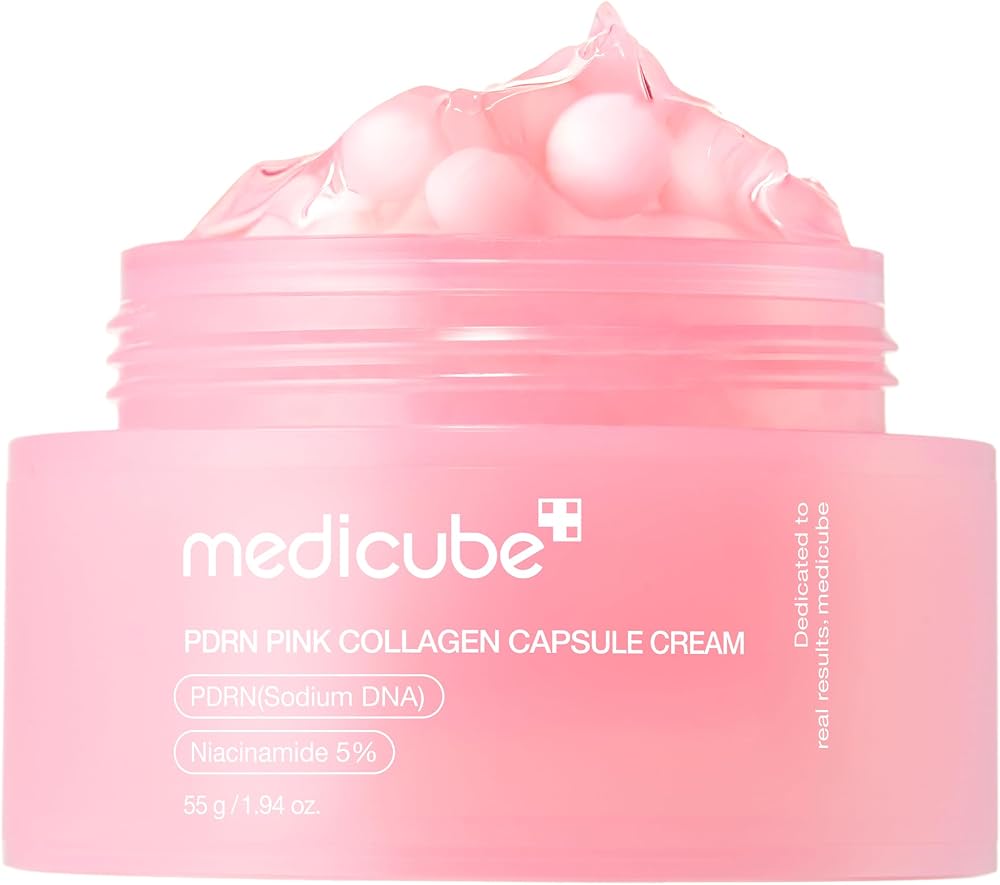
Medicube
Capsule Cream with Salmon DNA PDRN Pink Collagen
55ml
Targets fine lines and dullness · formulated with niacinamide
What about PDRN and exosomes?
This is where the skin-longevity category becomes particularly interesting — and considerably more complicated.
PDRN, exosomes and other regenerative technologies are increasingly appearing in advanced skincare, aesthetic treatments and professional settings.
But these categories aren't interchangeable, and evidence, regulation, formulations and routes of administration can differ significantly.
If a product sounds like it belongs in a medical journal rather than a bathroom cabinet, it's worth asking:
- What exactly is it?
- What evidence exists?
- How is it being delivered?
- And are the claims being made actually supported?
NOUI's approach will always be to look beyond the marketing.
Do you need a 10-step longevity routine?
Probably not.
In fact, one of the other major skincare shifts we're seeing is a move away from unnecessarily complicated routines.
A sensible longevity-focused routine could be surprisingly simple:
A sensible longevity routine
Morning
- 01Cleanse if needed
- 02Antioxidant/targeted serum
- 03Moisturiser
- 04SPF
Evening
- 01Cleanse
- 02One targeted active
- 03Moisturiser
You can then introduce additional ingredients depending on your individual skin concerns.
More products don't automatically mean better results.
The NOUI approach to skin longevity
At NOUI, we're interested in something slightly different from simply finding the product with the biggest marketing claims.
We want to ask:
- What does the evidence say?
- Who is the product actually suitable for?
- What ingredients does it contain?
- Is there a cheaper alternative?
- Where can you buy it for the best price?
Because the future of beauty isn't necessarily about buying more.
It's about buying better.
And that's where personalised beauty and intelligent product comparison come in.
The bottom line
Skin longevity isn't about trying to stop yourself ageing.
It's about giving your skin the best possible environment to remain healthy, resilient and protected as you get older.
The fundamentals still matter: SPF, barrier support, sensible active ingredients and consistency.
The exciting part is what comes next.
Peptides, regenerative technologies, personalised skincare and increasingly sophisticated formulations are opening up a much bigger conversation about what healthy skin could look like over the long term.
And that's a conversation we're going to be following very closely.
NOUI's verdict
- The trend: Worth watching.
- The hype: Significant.
- The fundamentals: Still win.
- Our advice: Don't chase every "longevity" product. Understand the ingredients, look at the evidence and choose products based on what your skin actually needs.
Key takeaways
- Skin longevity is about supporting skin health over time, not reversing ageing.
- Daily broad-spectrum SPF is the foundation — no serum replaces it.
- Retinoids and antioxidants remain evidence-led staples.
- Peptides are the category to watch, but formulation and evidence matter.
- Barrier support is as relevant to long-term skin health as collagen talk.
- Simpler routines, chosen well, usually beat longer ones.
This article is for general information and is not medical advice. Cosmetic and aesthetic claims should be assessed according to the quality of evidence behind them.
From the NOUI catalogue
Explore relevant products
Matched to what this guide covers. Prices come from our live retailer comparison, not from this article.
The Ordinary
Retinol 0.2% in Squalane
30ml
Targets visible signs of ageing and fine lines · formulated with retinol and squalane
Medicube
Capsule Cream with Salmon DNA PDRN Pink Collagen
55ml
Targets fine lines and dullness · formulated with niacinamide

COSRX
The Retinol 0.1 Cream
20ml
Targets visible signs of ageing and fine lines · formulated with retinol

La Roche-Posay
Anthelios UVMune 400 Hydrating Cream SPF50+
50ml
Targets visible signs of ageing and fine lines

Beauty of Joseon
Light On Serum Centella + Vita C
Targets dullness and compromised barrier · formulated with vitamin c and centella

Gold Bond
Age Renew Retinol Overnight Body & Face Lotion
385ml
Targets fine lines and texture · formulated with peptides and retinol
Keep exploring
Treatments and rituals to read next
- Microneedling (collagen induction)
A device passes very fine needles through the skin at a controlled depth to create tiny channels.
- LED light therapy (in clinic)
Sessions under a professional LED panel using red, blue or near-infrared wavelengths, often added to a facial.
- RF microneedling
Microneedling combined with radiofrequency energy delivered from the needle tips into the deeper skin.
More from this NOUI Edit
Skin Longevity
The shift from reversing ageing to protecting skin health
The Best Skin Longevity Products: NOUI’s Evidence-Led Edit
The skincare industry doesn’t have a shortage of products promising younger-looking skin. But which ones actually deserve a place in a skin-longevity routine?
· 12 min read
Skin Barrier vs Skin Longevity: Why Your Skin Barrier Matters More Than You Think
Before you add another anti-ageing serum to your routine, you might want to ask a more basic question: is your skin barrier actually healthy?
· 10 min read
Snail Mucin: Slime or Skincare Staple?
It sounds strange and it photographs worse. Snail mucin is also one of the better-studied hydrating ingredients to come out of K-beauty — here is what is actually in it, who it suits, and where it goes in a routine.
· 6 min read
The Best Ingredients for Skin Longevity: What Actually Deserves a Place in Your Routine?
Skin longevity is becoming one of the biggest ideas in beauty. But which skincare ingredients are actually worth your time — and your money?
· 12 min read
You may also like
The Gut-Skin Axis, Fact-Checked
The gut and skin do communicate. That does not mean your breakouts are a leaky gut, or that a probiotic is a skincare step.
· 8 min read
How to Do Skin Cycling Correctly (Without Wrecking Your Barrier)
Skin cycling is a scheduling trick, not an ingredient. Done properly it stops the over-exfoliation spiral. Done badly it just moves the damage to a different night.
· 8 min read

Sleep and Skin Barrier Repair: Why Rest Is Part of Your Routine
Barrier repair runs overnight. What sleep research supports for skin, and how to make the hours you already have count for more.
· 7 min read

Cortisol Face: What's Real and What's Exaggerated
Stress does affect skin. "Cortisol face" as a diagnosis you can spot in a selfie is a social-media invention. Here is the line between the two.
· 7 min read
Project Pan: The Skincare Trend That Saves Your Skin (and Money)
Finishing what you own is the only skincare trend with no downside. Here is how to run a project pan without ending up with a shelf of decanted disappointments.
· 6 min read
Exosomes & PDRN: What's Proven vs What's Still Being Tested
Two regenerative ingredients, two very different evidence bases. What exosomes and PDRN are, what the studies support, and what is still marketing.
· 8 min read