In-clinic treatment
LED light therapy (in clinic)
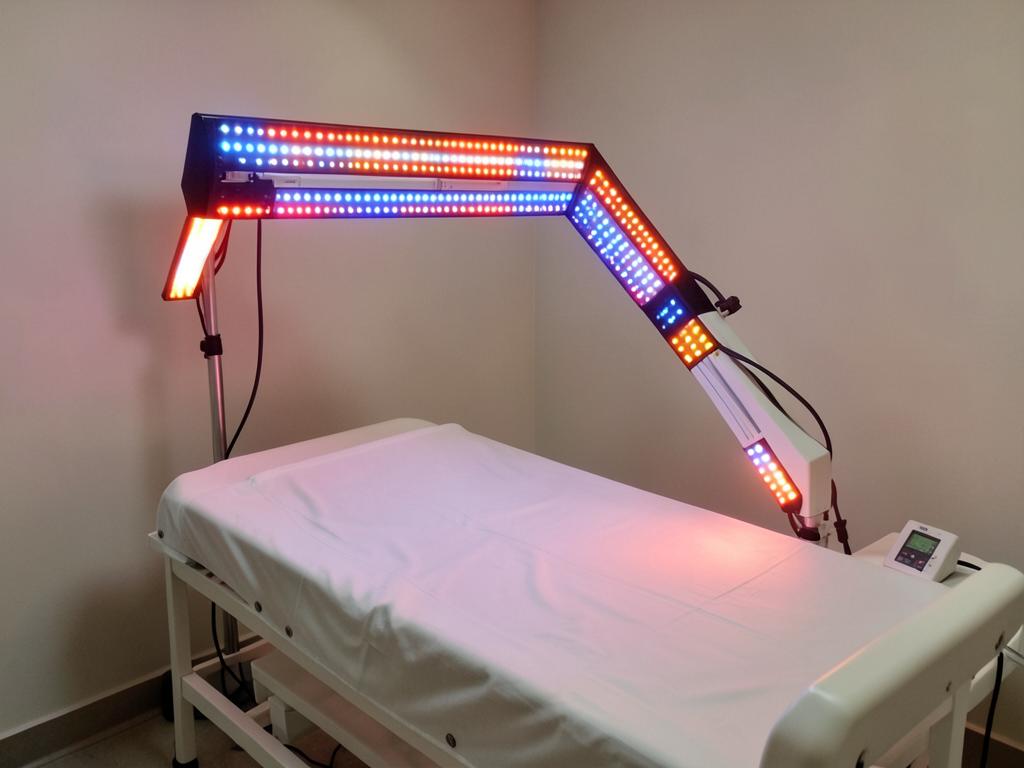
Sessions under a professional LED panel using red, blue or near-infrared wavelengths, often added to a facial.
Indicative cost
£25.00–£75.00 per session
Where it's done
Clinic · Salon
How long
20–30 minutes
Intensity
Gentle
Downtime
None — you can return to normal activity and makeup straight away.
Typical course
Often booked as a course of 6-10 weekly sessions, then spaced out.
Total course cost
£250–£750 for a full course
When people notice a change
Varies
Keeping it up
Top-up sessions every 4-8 weeks, or a home device between visits.
What it's used for
Used with the aim of calming the look of the skin and supporting a smoother appearance over a course.
How it works
Different wavelengths of visible and near-infrared light are absorbed by skin cells. Red and near-infrared light are commonly used in comfort and post-treatment protocols, while blue light is generally aimed at the bacteria associated with breakouts.
What a session actually involves
You lie under a panel with eye protection for roughly 10-20 minutes. It is painless and generates gentle warmth at most.
What people usually consider it for
- Breakouts
- Redness
- Dullness
- Fine lines
- Sensitivity or irritation
- Uneven tone
This reflects what the treatment is commonly used for — not a claim that it will work for you.
When it may not be suitable
- You take medication or use products that increase light sensitivity
- You have a condition triggered by light
- You are unsure and have not spoken to a clinician
This list is not exhaustive. A qualified practitioner should assess you before any treatment.
Things to weigh up
- — Always use the eye protection provided
- — Tell the practitioner about any photosensitising medication
What the evidence looks like
Widely studied for tolerability, with mixed and generally modest published results. Outcomes vary by device, wavelength and protocol.
Questions worth asking first
Ask which wavelengths and irradiance the device uses, and how many sessions are typically needed before any change is assessed.
What tends to sit alongside it
- Gentle cleanser
- Barrier moisturiser
Others people compare it with
Treatments and devices are listed for information only. Nothing here is medical advice, a diagnosis, or a promise of a result. Suitability depends on your health, skin and the specific device or practitioner — always check with a qualified professional first. We don't take bookings or refer you to providers. Last reviewed 2026-09-09.