Peptides in Skincare: What Do They Actually Do?
Peptides are everywhere in skincare right now. But what are they actually doing for your skin — and are they worth paying more for?
NOUI Collective · · 9 min read
If you have bought a serum or moisturiser recently, there is a good chance you have seen the word peptides on the label.
They are increasingly associated with collagen, firmness, fine lines and the growing skin longevity movement. But "peptide" is not one single ingredient. There are many different types of cosmetic peptides, and they can have very different proposed functions.
So what are they actually doing in your skincare?
What are peptides?
Peptides are short chains of amino acids. Amino acids are the building blocks of proteins, and proteins such as collagen and elastin play important structural roles in skin.
In skincare, manufacturers use different peptides for different purposes. Some are designed to act as signal peptides, some as carrier peptides, while others have been investigated for effects on processes associated with pigmentation, inflammation or expression lines.
A 2025 review identified more than 100 commercially available cosmetic peptides and found that the evidence supporting their claimed activities varies considerably between different peptide types (2025 review of cosmetic peptides, indexed on PubMed).
That is important. "Contains peptides" is not enough information to tell you whether a product is likely to do much.
Why are peptides suddenly everywhere?
Peptides are not actually new. They have been used in cosmetic formulations for years. What has changed is the scale of interest around them.
Beauty is increasingly moving towards skin longevity, regenerative skincare and science-led ingredients, and peptides fit neatly into that conversation. Current beauty coverage also places peptides alongside newer regenerative ingredients and technologies as part of the next generation of skincare (reported in the beauty press, including Vogue).
But there is a danger here. The more fashionable an ingredient becomes, the easier it is for marketing claims to get ahead of the evidence.
What can peptides do for skin?
This depends entirely on the peptide. Some cosmetic peptides have been investigated for supporting processes associated with:
- collagen and extracellular matrix activity
- skin firmness
- hydration
- the appearance of fine lines
- pigmentation
- skin repair
- antioxidant activity
- expression lines
The evidence is not equally strong for all of these.
A 2026 systematic review and meta-analysis of randomised controlled trials found that peptide interventions were associated with improvements in some measures of skin ageing, particularly hydration and brightness, with a modest effect on wrinkle reduction. The researchers noted substantial variation between studies and highlighted that the evidence for topical peptides specifically remains limited (2026 systematic review and meta-analysis, indexed on PubMed).
Some peptides show promise. But the evidence depends heavily on which peptide, which formulation, and what outcome you are measuring.
The main types of peptides you will see
Signal peptides
Signal peptides are designed to mimic signalling processes involved in the skin's extracellular matrix. Some are marketed around supporting collagen or other structural components, and they appear frequently in anti-ageing and skin-longevity products.
Carrier peptides
Carrier peptides are associated with delivering or stabilising certain minerals or other components within formulations. Copper peptides are one of the best-known examples.
Neurotransmitter-inhibiting peptides
Some peptides are marketed around reducing the appearance of expression lines by influencing processes involved in muscle contraction. They are sometimes described as "Botox-like" peptides.
That terminology should be treated cautiously. A topical cosmetic peptide is not equivalent to a botulinum toxin treatment.
Other bioactive peptides
Many other peptide technologies are being investigated for antioxidant, pigmentation, antimicrobial and other biological effects. This is one reason the word "peptide" on its own does not tell you very much.
Products worth exploring
From the NOUI catalogue, matched to what this guide covers. Prices come from our live retailer comparison.
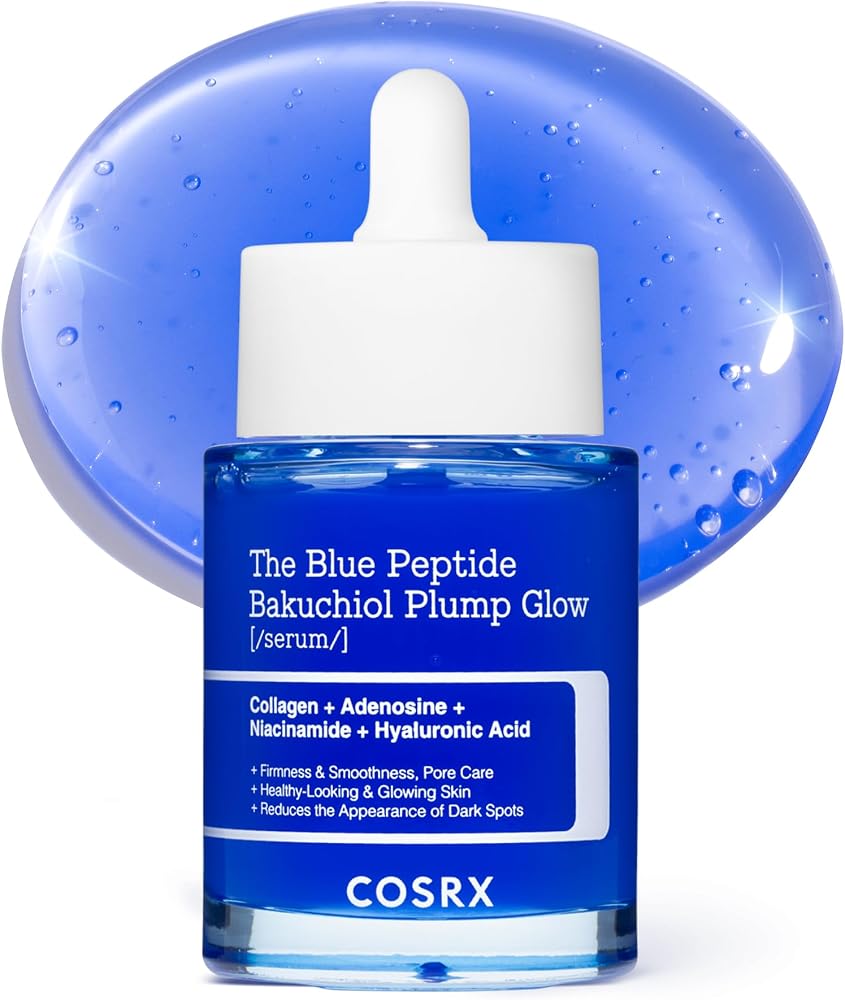
COSRX
The Blue Copper Peptide Bakuchiol Serum
50ml
Targets fine lines and visible signs of ageing · formulated with peptides

The Ordinary
Retinol 0.2% in Squalane
30ml
Targets fine lines and visible signs of ageing · formulated with retinol
What are copper peptides?
Copper peptides are one of the most talked-about peptide categories in beauty. The best-known example is GHK-Cu, a copper-containing peptide that has attracted interest because of its proposed role in processes associated with skin repair and extracellular matrix activity. It is also one of the most heavily marketed ingredients within the current skin-longevity conversation.
But there is an important distinction between interesting biological research and proven results from a particular cosmetic product. The formulation, concentration, stability and delivery system all matter.
Coming next
Copper Peptides (GHK-Cu): What Does the Evidence Actually Say?
We will look at the science, what GHK-Cu actually is, what we know about topical use, and whether the expensive products currently on the market justify their price.
Peptides vs collagen
This is another area where terminology gets confusing. A peptide is not necessarily the same thing as collagen. Collagen is a large structural protein; peptides are much smaller chains of amino acids.
Some products use collagen-derived peptides, while others contain synthetic peptides designed to perform specific functions. And if you are taking collagen peptides as a supplement, that is a separate question again from applying a peptide serum to your skin.
A recent review found that oral and topical peptide studies produced different results, with much of the available clinical evidence coming from oral peptide interventions rather than topical products (review available via PubMed Central).
So do not assume that evidence for oral collagen peptides automatically proves that a topical peptide serum will produce the same result.
Are peptides better than retinol?
Not necessarily, and this is not really an either/or decision.
Retinoids have a much longer and more established evidence base for addressing photoageing than many cosmetic peptide formulations. Peptides may complement a routine rather than replace every established active.
Individual tolerance matters too. Someone who cannot tolerate a retinoid may prefer a gentler peptide-focused routine; someone who can tolerate a retinoid may choose to use both. We will compare these properly in the next stages of the NOUI Skin Longevity Edit.
Do expensive peptide products work better?
This is where NOUI gets particularly interested. A £150 peptide serum is not automatically better than a £30 peptide serum. Price can reflect the peptide technology, concentration, supporting ingredients, delivery systems, packaging, research and development, brand positioning, marketing and retail margins.
The only way to judge value is to look beyond the price tag:
- What peptide is actually being used?
- How much is included?
- What else is in the formula?
- What evidence supports the claims?
- Are there cheaper alternatives?
That is exactly the kind of comparison NOUI is designed to make easier. For the wider context, our pillar guide explains the idea in full: Skin Longevity: What Does It Actually Mean for Your Skin?. And if the language on the packaging is confusing, Skin Longevity vs Anti-Ageing: What's the Difference? untangles the two approaches.
How should you use peptide skincare?
There is no universal peptide routine, because different formulations are designed for different purposes. A simple approach is to follow the manufacturer's instructions and introduce new products gradually.
If you are already using active ingredients such as retinoids or exfoliating acids, there is usually little benefit in adding several new products at once. Otherwise, if your skin reacts, you will not know which product caused it.
A sensible longevity routine
Morning
- 01Antioxidant or targeted serum
- 02Moisturiser
- 03Broad-spectrum SPF
Evening
- 01Cleanser
- 02Retinoid OR peptide-focused treatment
- 03Moisturiser
Depending on the products and your skin, peptides can also be layered alongside other compatible ingredients. The goal is not to collect as many actives as possible. It is to build a routine you can actually maintain.
NOUI's verdict
- Worth attention: there is genuine scientific interest behind the category, and some peptides have encouraging evidence
- Not worth blind spending: "peptide" has become a powerful marketing word
- Read the formula: check which peptide, at what level, and what supports it
- Keep perspective: sunscreen and a tolerable retinoid still do the heavy lifting for most people
- Our rule: do not buy the peptide, buy the formulation
Because the best skincare is not necessarily the product with the most impressive ingredient list. It is the product that combines a sensible formulation, credible evidence, suitability for your skin and a price that makes sense — and that is exactly what we will keep investigating throughout the NOUI Skin Longevity Edit.
This article is for general information and is not medical advice. Cosmetic ingredients can affect individuals differently. Follow product instructions and seek professional advice for persistent or concerning skin problems.
From the NOUI catalogue
Explore relevant products
Matched to what this guide covers. Prices come from our live retailer comparison, not from this article.
COSRX
The Blue Copper Peptide Bakuchiol Serum
50ml
Targets fine lines and visible signs of ageing · formulated with peptides
The Ordinary
Retinol 0.2% in Squalane
30ml
Targets fine lines and visible signs of ageing · formulated with retinol

COSRX
The Retinol 0.1 Cream
20ml
Targets fine lines and visible signs of ageing · formulated with retinol
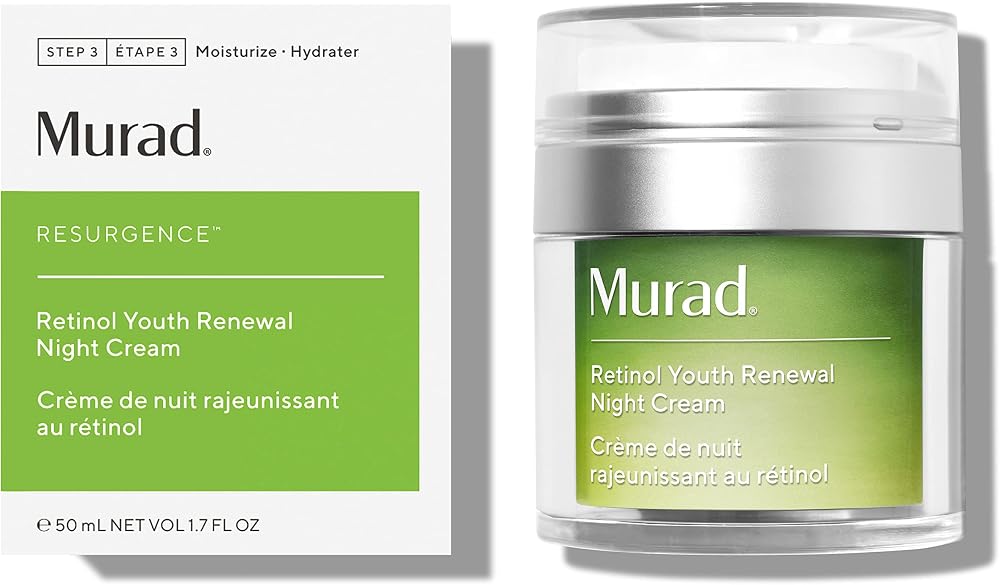
Murad
Retinol Youth Renewal Night Cream
50ml
Targets fine lines and visible signs of ageing · formulated with peptides and retinol

CurrentBody
CurrentBody Skin LED Light Therapy Mask Series 2
Targets fine lines and visible signs of ageing

CeraVe
Resurfacing Retinol Serum
30ml
Targets fine lines and visible signs of ageing · formulated with retinol
Keep exploring
Treatments and rituals to read next
- Professional chemical peel
A controlled acid solution is applied by a professional to exfoliate the surface layers more deeply than a home product.
- LED light therapy (in clinic)
Sessions under a professional LED panel using red, blue or near-infrared wavelengths, often added to a facial.
- Microneedling (collagen induction)
A device passes very fine needles through the skin at a controlled depth to create tiny channels.
More from this NOUI Edit
Skin Longevity
The shift from reversing ageing to protecting skin health
Skin Longevity: What Does It Actually Mean for Your Skin?
Skin longevity is one of beauty's biggest shifts in 2026. But is it just a new name for anti-ageing — or is there more to it?
· 8 min read
The Best Skin Longevity Products: NOUI’s Evidence-Led Edit
The skincare industry doesn’t have a shortage of products promising younger-looking skin. But which ones actually deserve a place in a skin-longevity routine?
· 12 min read
Skin Barrier vs Skin Longevity: Why Your Skin Barrier Matters More Than You Think
Before you add another anti-ageing serum to your routine, you might want to ask a more basic question: is your skin barrier actually healthy?
· 10 min read
Snail Mucin: Slime or Skincare Staple?
It sounds strange and it photographs worse. Snail mucin is also one of the better-studied hydrating ingredients to come out of K-beauty — here is what is actually in it, who it suits, and where it goes in a routine.
· 6 min read
You may also like
Skin Longevity: What Does It Actually Mean for Your Skin?
Skin longevity is one of beauty's biggest shifts in 2026. But is it just a new name for anti-ageing — or is there more to it?
· 8 min read
Skin Longevity vs Anti-Ageing: What's the Difference?
Anti-ageing skincare has been around for decades. So why is everyone suddenly talking about skin longevity — and is it actually different?
· 8 min read
Can Peptides Really Stimulate Collagen? What the Science Says
Peptides are sold on the promise of collagen. Here is what laboratory and human research actually shows, where the evidence is still thin, and how to read a peptide claim without being sold a story.
· 9 min read
Retinol vs Peptides: Which Is Better for Your Skin?
Two of the biggest names in modern anti-ageing skincare — but should you choose retinol or peptides? We compare the evidence, the irritation risk and whether you need both.
· 10 min read
Copper Peptides (GHK-Cu): What Does the Evidence Actually Say?
Copper peptides are having a major moment in skincare. But behind the futuristic packaging and "skin regeneration" claims, what does the science actually tell us?
· 10 min read
The Best Skin Longevity Products: NOUI’s Evidence-Led Edit
The skincare industry doesn’t have a shortage of products promising younger-looking skin. But which ones actually deserve a place in a skin-longevity routine?
· 12 min read
Brands in this piece