Retinol vs Peptides: Which Is Better for Your Skin?
Two of the biggest names in modern anti-ageing skincare — but should you choose retinol or peptides? We compare the evidence, the irritation risk and whether you need both.
NOUI Collective · · 10 min read
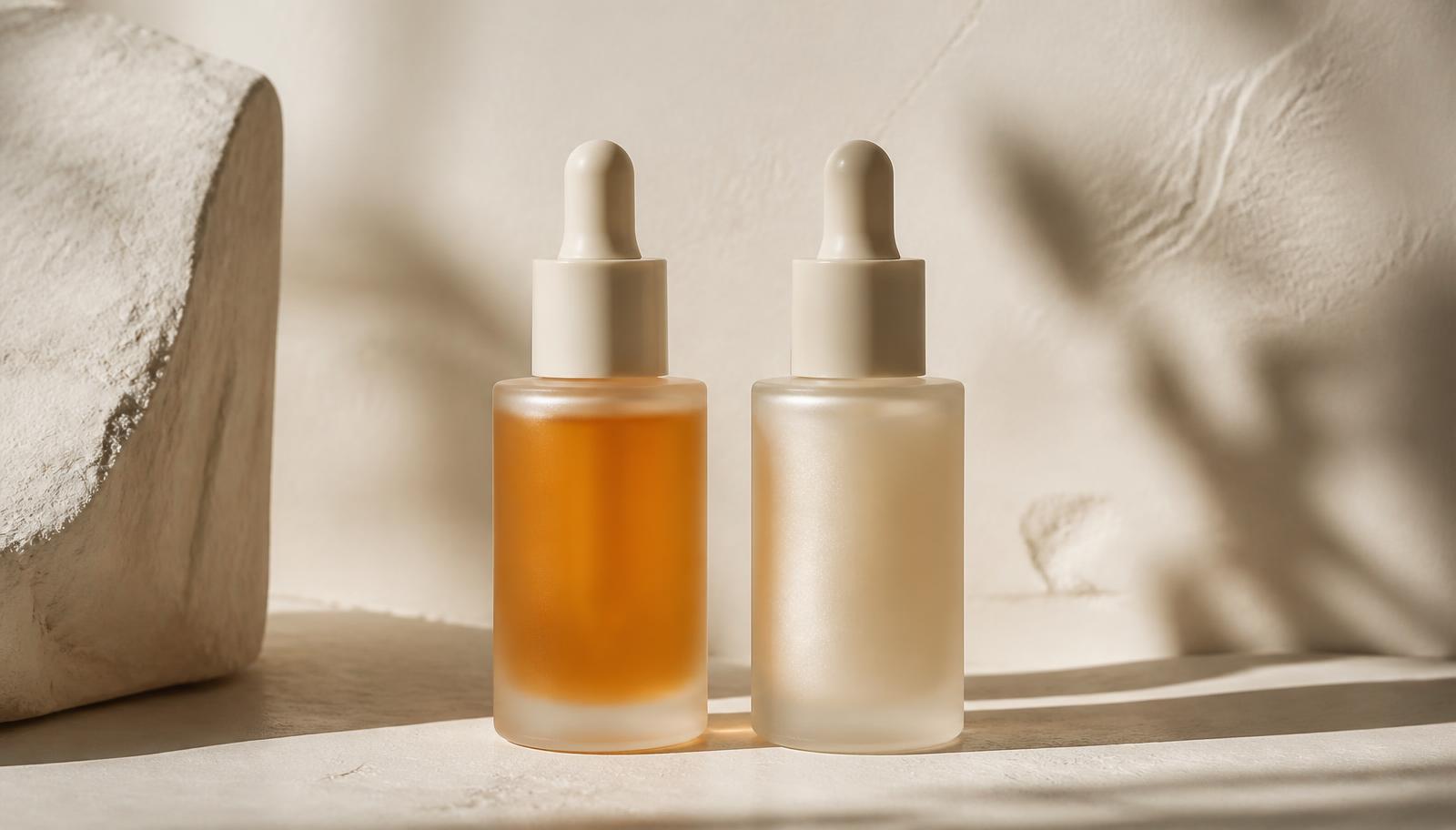
If you are interested in skin longevity, you have probably encountered both. Retinol. Peptides.
Both are regularly associated with smoother, firmer, younger-looking skin. Both appear in everything from affordable pharmacy products to £200+ luxury serums. But they work in very different ways, and the evidence behind them is not quite the same.
So if you had to choose just one, which deserves a place in your routine? The answer depends on what you are trying to achieve, your skin''s tolerance, and how much evidence you want behind your investment.
Key takeaways
- Retinoids have the more established evidence base for topical photoageing
- Peptides are a family of ingredients, so evidence varies from one peptide to the next
- Retinol can irritate; many peptide formulations are easier to tolerate
- You do not have to choose — they can play different roles in one routine
- Price rarely tells you which formulation is better
First: what is retinol?
Retinol is a form of vitamin A. It is part of a wider family of compounds called retinoids, which includes prescription retinoids as well as over-the-counter cosmetic forms such as retinol.
Retinoids have been extensively studied for photoageing and are among the most established topical ingredients used to improve the appearance of fine lines, pigmentation and skin texture (topical retinoid review, PubMed Central).
Retinol itself needs to undergo conversion within the skin before becoming the active retinoic acid form. That is one reason prescription retinoids and cosmetic retinol are not interchangeable.
Retinol explainer: a cosmetic vitamin A derivative that the skin converts, in stages, towards retinoic acid. Strength, formulation and how gradually you introduce it all matter more than the number on the front of the box.
What does retinol do?
Retinoids influence processes involved in skin-cell turnover and the extracellular matrix. With consistent use, topical retinoids can help improve the appearance of:
- fine lines
- uneven texture
- pigmentation
- photodamage
- dullness
They are also widely used in acne management, although this article is focused on cosmetic skin ageing rather than treating acne.
The important point is that retinoids have a substantial evidence base behind them. That does not mean they are perfect. They can also cause irritation, dryness, redness and peeling, particularly when someone starts using them or increases their strength too quickly.
Now: what are peptides?
Peptides are short chains of amino acids. Unlike retinol, however, peptides are not one single ingredient. There are many different cosmetic peptides, with different structures and proposed functions.
Some are designed as signal peptides. Others are carrier peptides. Some are marketed around expression lines, pigmentation or other cosmetic effects.
Peptide explainer: a broad family of amino-acid chains used in cosmetic formulations. The useful question is never "do peptides work?" but which peptide, at what concentration, in which formulation, for which outcome.
Our previous article explores this in more detail: Peptides in Skincare: What Do They Actually Do?.
So which has better evidence?
If we are specifically talking about topical photoageing, retinoids currently have the advantage. They have been studied extensively over decades, and clinical evidence supports their ability to improve several visible signs of photoaged skin.
Peptides are a much broader category, and the evidence varies substantially between individual ingredients. Research continues to find promising results for peptide-based cosmetic ingredients, but studies differ in peptide type, formulation, dose, duration and outcome measures (cosmetic peptide review, PubMed Central). That makes it much harder to compare the entire peptide category with retinol as if they were equivalent ingredients.
Brands working in both areas make a similar point: Medik8''s own explainer on retinoids versus peptides frames them as complementary rather than competing.
NOUI verdict
- Retinol — established evidence
- Stronger
- Peptides — established evidence
- Promising, ingredient-specific
- Interchangeable?
- No
- Complementary?
- Often
That does not mean peptides are ineffective. It means we have considerably more confidence in the overall evidence base for retinoids.
Does retinol stimulate collagen?
This is one reason retinoids have become so important in skin longevity. Topical retinoids have been shown to influence collagen-related processes and can improve the appearance of photoaged skin.
But again, there is a difference between "influences collagen biology" and "rebuilds your skin". Beauty marketing often compresses complicated biology into very simple claims. Real skin is considerably more complicated.
The useful question is not whether an ingredient does something in a laboratory. It is whether a particular formulation makes a meaningful difference to real skin, used the way real people use it.

What about peptides and collagen?
Some peptides have been investigated for effects on collagen and the extracellular matrix. Signal peptides, for example, are designed around signalling processes associated with structural proteins.
Copper peptides such as GHK-Cu have also attracted significant interest. But evidence varies substantially between peptide types.
That is why you should not buy a serum simply because the word "collagen" appears on the packaging. Look at the actual peptide. Then look at the evidence behind that specific peptide.
Which is better for beginners?
This depends on your skin. Retinol can be extremely useful, but it is not necessarily the ingredient to introduce aggressively. If you decide to try retinol, starting gradually can help your skin adjust.
- start with a couple of evenings per week
- monitor dryness, redness or irritation
- increase gradually if your skin stays comfortable
The exact strength and frequency should depend on the product and your individual skin. And do not forget daytime sun protection.
What about sensitive skin?
This is where peptides can become particularly appealing. Many peptide products are formulated to be relatively gentle and can fit into routines focused on hydration and barrier support.
But "peptide" does not automatically mean irritation-free. A finished formulation can contain many other ingredients, and individual reactions vary.
If your skin is already irritated, the answer is not necessarily to add another active. Sometimes the best longevity routine is simply cleanse, moisturise, protect — then introduce targeted actives once your barrier is comfortable.
Can you use retinol and peptides together?
Potentially, yes. There is not a universal reason that everyone must choose one or the other. They can occupy different roles within a routine.
A sensible longevity routine
An example evening order
- 01Cleanser
- 02Retinol
- 03Peptide or moisturising serum, depending on the formulation
- 04Moisturiser
Or split them across the day
- 01Peptides in the morning
- 02Sun protection every morning
- 03Retinol in the evening
- 04Follow each manufacturer''s directions
The exact combination depends on the individual products. Always follow the manufacturer''s directions, particularly if a product contains multiple active ingredients.
Should you buy a peptide serum if you already use retinol?
Maybe. But do not feel as though you need one. If your routine already contains an effective retinoid, moisturiser and daily SPF, adding five more longevity products is not automatically going to produce five times the results.
This is one of the biggest misconceptions in modern skincare. More products does not mean better skin.
What about copper peptides specifically?
Copper peptides deserve their own category. GHK-Cu is one of the most interesting peptides in the skin-longevity space, but its evidence base and formulation considerations are different from those of retinol.
We have already explored the evidence in Copper Peptides (GHK-Cu): What Does the Evidence Actually Say?. If you are considering a copper peptide product, read that first before spending heavily on one.
Retinol vs peptides: the NOUI comparison
Compare
Retinol
Peptides
- Ingredient type
- RetinolA vitamin A derivative — one defined family
- PeptidesA large family of amino-acid chains
- Evidence for photoageing
- RetinolStrong and long established
- PeptidesVaries considerably by peptide
- Fine lines
- RetinolStrong evidence
- PeptidesPromising, varies by ingredient
- Texture
- RetinolStrong evidence
- PeptidesDepends on the peptide and formulation
- Collagen-related evidence
- RetinolWell studied
- PeptidesSome promising evidence
- Irritation potential
- RetinolCan be significant, especially early on
- PeptidesOften lower, but formulation matters
- Typical use
- RetinolEvenings, built up gradually, with daily SPF
- PeptidesMorning or evening, often alongside moisturisers
- Suitability
- RetinolPhotoageing and visible ageing concerns, if tolerated
- PeptidesSensitive skin and support alongside an established routine
What should you choose?
Choose retinol if you want an ingredient with a strong established evidence base for photoageing, you are willing to introduce it gradually, you can tolerate it, and you are prepared to be consistent.
Consider peptides if you want to explore newer or more targeted skincare technologies, your skin does not tolerate stronger actives well, you want additional support alongside an established routine, or you are interested in a specific peptide and have researched that individual ingredient.
Or use both. For some people, that may make more sense than choosing one. But the goal should always be the simplest effective routine you can stick to.
And what about price?
You can find retinol products for relatively little money. You can also spend hundreds. The same applies to peptides. But price does not automatically correlate with results — a £150 serum is not necessarily five times better than a £30 serum.
That is why NOUI always looks at ingredient, then formulation, then evidence, then suitability, then price, then alternatives. Not luxury packaging, therefore expensive, therefore better.
The NOUI 80/20 approach
NOUI's verdict
- Protect: daily SPF and sensible UV protection
- Support: keep the skin barrier hydrated and comfortable
- Target: introduce evidence-backed actives according to your goals
- Do not overcomplicate: consistency usually beats a shelf full of products
- Compare: before spending £100+ on a trending serum, check for a better-value alternative
NOUI verdict
NOUI verdict
- Strongest established evidence
- Retinoids
- Most interesting emerging category
- Peptides
- Sensitive or easily irritated skin
- Peptides, formulation depending
- Best for value
- Compare the formulation, not the price tag
- For skin longevity
- You do not have to choose
Retinol and peptides are not really competitors. They are different tools. If retinoids are the established workhorse of topical anti-ageing skincare, peptides are a rapidly evolving category that deserves attention — and a healthy degree of scepticism.
If the language around all of this still feels slippery, Skin Longevity vs Anti-Ageing: What''s the Difference? untangles the two approaches, and our pillar guide sets out the whole idea: Skin Longevity: What Does It Actually Mean for Your Skin?.
And that is ultimately the NOUI approach: do not buy the trend, understand the ingredient. Then decide whether the product deserves a place in your routine.
Coming next
Can Peptides Really Stimulate Collagen?
The next guide in the Skin Longevity Edit looks at what collagen claims actually rest on, and where the evidence stops.
This article is for general information and is not medical advice. Skincare ingredients can affect individuals differently, and retinoids in particular can cause irritation. Always follow product instructions and seek advice from an appropriately qualified healthcare professional where appropriate.
NOUI Retinol Edit
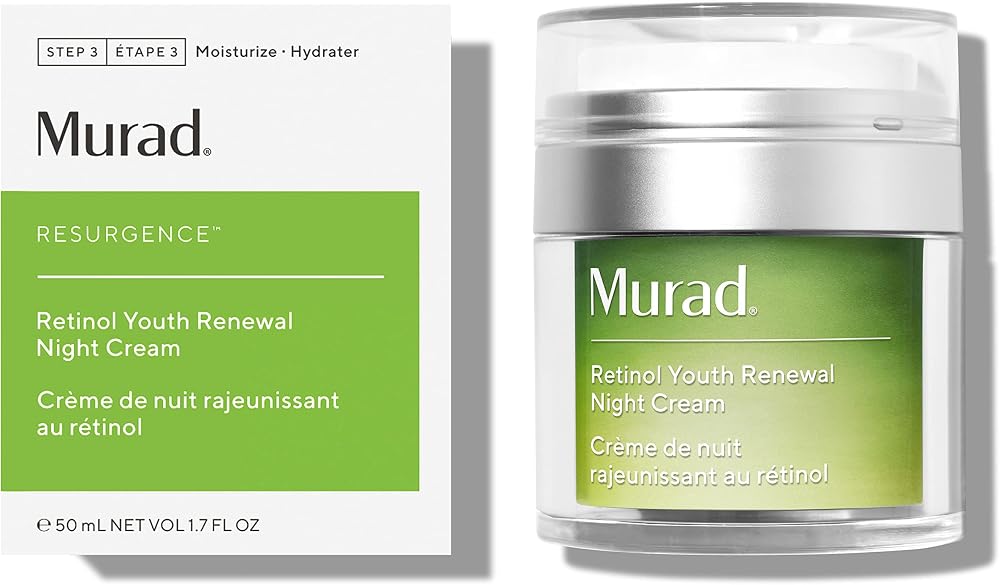
Retinoids in the NOUI catalogue
Cosmetic retinol and retinal products already in our catalogue. Introduce any of them gradually, use them in the evening, and pair them with daily sun protection.


NOUI Peptide Edit
Peptide formulations worth comparing
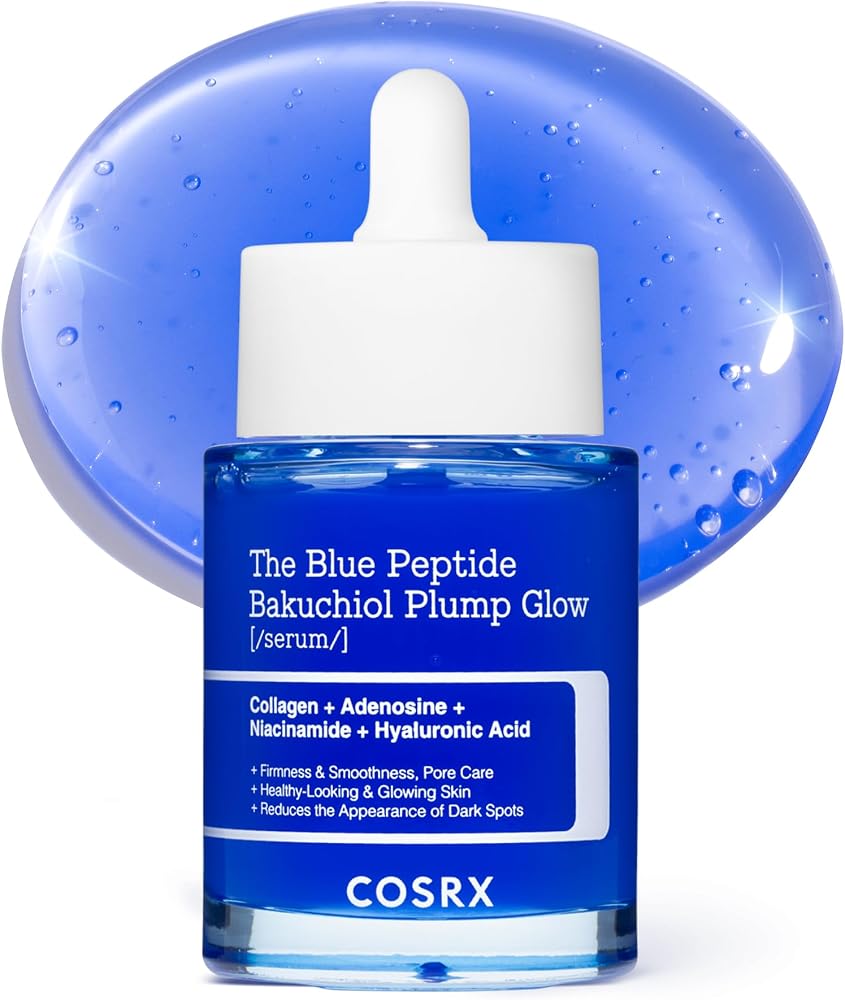
Peptides are a family, not a single ingredient — evidence differs between them. Compare the formulation and the price rather than the claim on the front of the bottle.
COSRX
The Blue Copper Peptide Bakuchiol Serum
50ml
Copper peptides with bakuchiol · Lightweight, layerable texture
Medicube
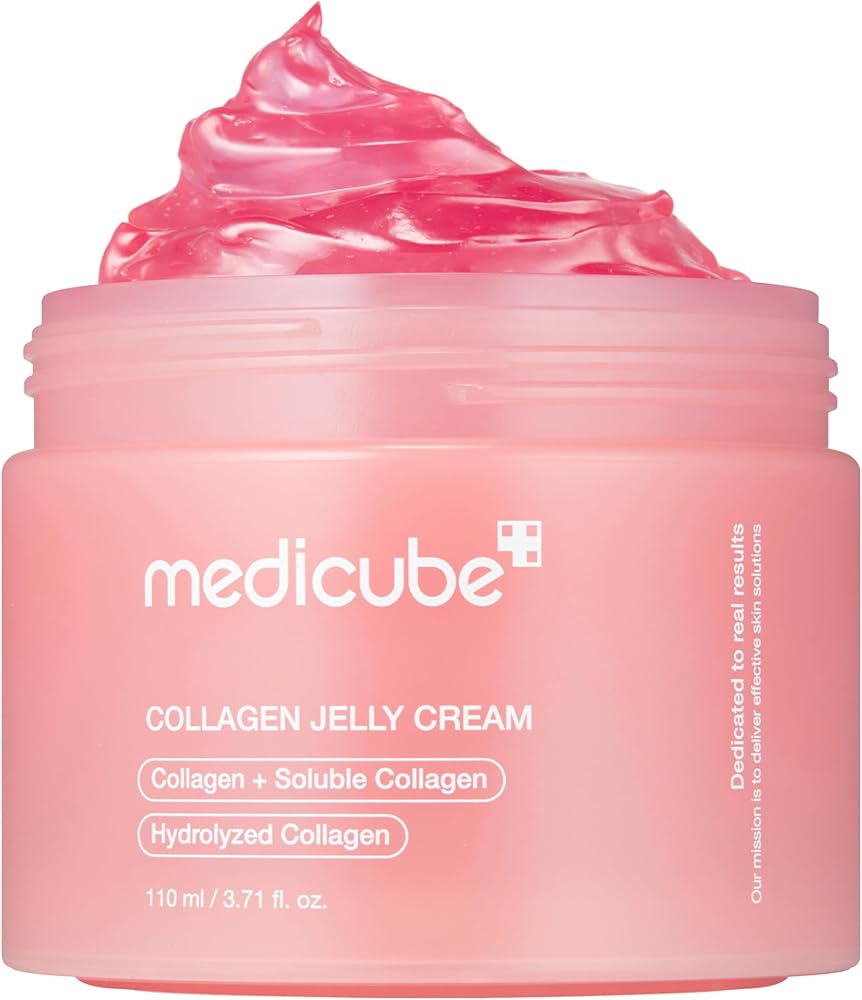
Collagen and Niacinamide Jelly Cream
110ml
Jelly texture, fast absorbing · Collagen with niacinamide
We're onboarding retail partners for this product.
Keep exploring
Treatments and rituals to read next
- Microneedling (collagen induction)
A device passes very fine needles through the skin at a controlled depth to create tiny channels.
- Professional chemical peel
A controlled acid solution is applied by a professional to exfoliate the surface layers more deeply than a home product.
- RF microneedling
Microneedling combined with radiofrequency energy delivered from the needle tips into the deeper skin.
More from this NOUI Edit
Skin Longevity
The shift from reversing ageing to protecting skin health
Skin Longevity: What Does It Actually Mean for Your Skin?
Skin longevity is one of beauty's biggest shifts in 2026. But is it just a new name for anti-ageing — or is there more to it?
· 8 min read
The Best Skin Longevity Products: NOUI’s Evidence-Led Edit
The skincare industry doesn’t have a shortage of products promising younger-looking skin. But which ones actually deserve a place in a skin-longevity routine?
· 12 min read
Skin Barrier vs Skin Longevity: Why Your Skin Barrier Matters More Than You Think
Before you add another anti-ageing serum to your routine, you might want to ask a more basic question: is your skin barrier actually healthy?
· 10 min read
Snail Mucin: Slime or Skincare Staple?
It sounds strange and it photographs worse. Snail mucin is also one of the better-studied hydrating ingredients to come out of K-beauty — here is what is actually in it, who it suits, and where it goes in a routine.
· 6 min read
You may also like
Skin Longevity: What Does It Actually Mean for Your Skin?
Skin longevity is one of beauty's biggest shifts in 2026. But is it just a new name for anti-ageing — or is there more to it?
· 8 min read
Copper Peptides (GHK-Cu): What Does the Evidence Actually Say?
Copper peptides are having a major moment in skincare. But behind the futuristic packaging and "skin regeneration" claims, what does the science actually tell us?
· 10 min read
Peptides in Skincare: What Do They Actually Do?
Peptides are everywhere in skincare right now. But what are they actually doing for your skin — and are they worth paying more for?
· 9 min read
Skin Longevity vs Anti-Ageing: What's the Difference?
Anti-ageing skincare has been around for decades. So why is everyone suddenly talking about skin longevity — and is it actually different?
· 8 min read
Can Peptides Really Stimulate Collagen? What the Science Says
Peptides are sold on the promise of collagen. Here is what laboratory and human research actually shows, where the evidence is still thin, and how to read a peptide claim without being sold a story.
· 9 min read
The Best Skin Longevity Products: NOUI’s Evidence-Led Edit
The skincare industry doesn’t have a shortage of products promising younger-looking skin. But which ones actually deserve a place in a skin-longevity routine?
· 12 min read
Brands in this piece