Can Peptides Really Stimulate Collagen? What the Science Says
Peptides are sold on the promise of collagen. Here is what laboratory and human research actually shows, where the evidence is still thin, and how to read a peptide claim without being sold a story.
NOUI Collective · · 9 min read
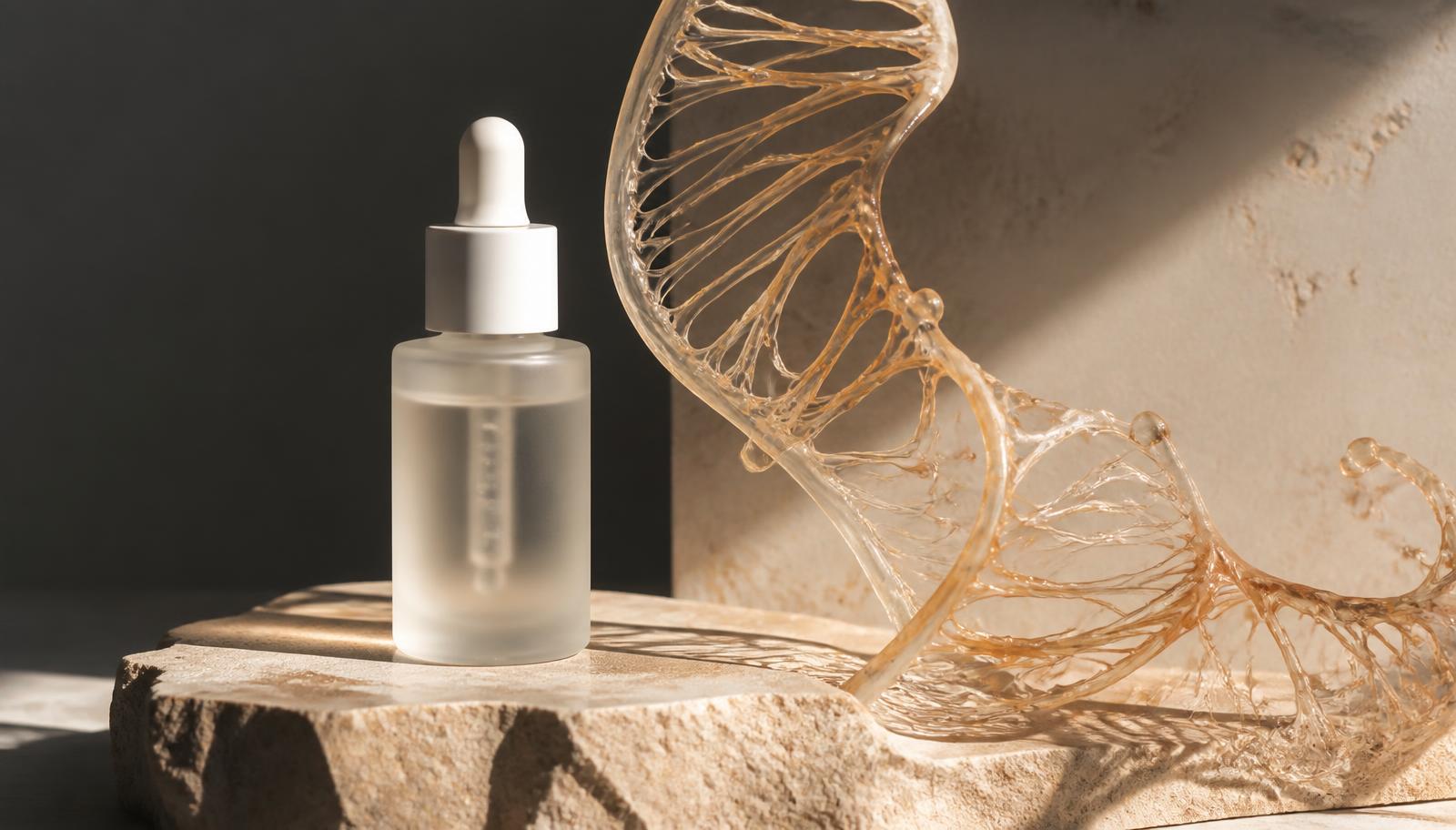
Peptides are marketed almost entirely on one promise: more collagen. Firmer skin. Bounce. Structure. The word appears on serums costing £12 and serums costing £180, and the implication is always the same — apply this, and your skin will build collagen again.
It is a genuinely interesting scientific idea. It is also one of the most over-stated claims in skincare. So it is worth separating what has been shown in laboratory research, what has been shown in human skin, and what is still marketing.
Key takeaways
- Collagen is made by fibroblasts in the dermis, not by the product sitting on your skin
- Some peptides do influence collagen-related activity in laboratory studies
- Human evidence is more limited, and varies enormously between individual peptides
- "Contains peptides" tells you almost nothing about likely results
- Retinoids still have the deeper evidence base for visible photoageing
What collagen actually is
Collagen is the main structural protein in your skin. It sits in the dermis, the deeper layer beneath the surface you can see and touch, woven into a supportive scaffold alongside elastin and other components of the extracellular matrix.
That scaffold is what gives young skin its density and resilience. Over time, and particularly with cumulative ultraviolet exposure, the quality and organisation of that matrix changes. Collagen production slows, existing collagen fragments, and the visible result is thinner, less firm skin with more visible lines.
If you want the wider picture of how this fits into ageing skin, our pillar guide covers it: Skin Longevity: What Does It Actually Mean for Your Skin?.
NOUI explainer
What are fibroblasts?
Fibroblasts are the cells in your dermis that manufacture collagen, elastin and other matrix components. Nothing you apply to the surface of your skin makes collagen directly — at best, an ingredient influences how these cells behave.
That distinction matters for every collagen claim you will ever read. The question is never "does this contain collagen-building ingredients?" but "can this ingredient reach the right cells, in a form and quantity that changes what they do?"

Where peptides come in
Peptides are short chains of amino acids — the same building blocks that make up proteins, including collagen itself. Because fragments of collagen breakdown occur naturally in skin, researchers explored an appealing hypothesis: if the skin interprets certain peptide fragments as a signal that damage has occurred, applying similar peptides might prompt a repair response.
That is the theory behind signal peptides. Other peptide families work differently — carrier peptides deliver trace elements such as copper, and some peptides are formulated around the appearance of expression lines rather than matrix repair at all.
This is why "peptides" is not a single ingredient with a single evidence base. It is a category, and the category is broad. We unpack the types in Peptides in Skincare: What Do They Actually Do?.
So what does the research show?
Reviews of cosmetic peptides describe a body of research where several peptides show effects on collagen-related activity, most consistently in laboratory and cell-culture settings, with a smaller number of human studies suggesting improvements in the appearance of wrinkles and firmness (cosmetic peptide review, PubMed Central).
The honest summary is that the direction of the evidence is encouraging and the strength of it is uneven. Studies differ in which peptide was used, at what concentration, in what base formulation, for how long, and how the outcome was measured. Many are small. Some are funded by the companies selling the ingredient — which does not make them wrong, but does mean independent replication matters.
That is very different from saying peptides do nothing. It is also very different from the promise on most packaging.
The NOUI evidence ladder
Evidence becomes more meaningful as you climb — laboratory findings are interesting, replicated human results are convincing.
Level 1 — Cell and laboratory studies
A peptide changes collagen-related activity in cultured cells or isolated skin models. Genuinely useful for identifying candidates. Tells you nothing yet about your face.
Level 2 — Formulation and penetration studies
The peptide survives in the product and can plausibly reach the dermis at a relevant concentration. Frequently the weakest link in a real product.
Level 3 — Small human studies
A finished formulation improves measured or graded appearance of lines and firmness in a modest group of participants, often over 8 to 12 weeks.
Level 4 — Replicated, independent human evidence
Consistent results across multiple well-designed studies not funded by a single manufacturer. This is where retinoids sit for photoageing. Very few individual cosmetic peptides are here yet.
Why "contains peptides" is not a result
A peptide has to clear several hurdles before it can influence anything structural:
- it must remain stable in the formulation on the shelf
- it must be present at a meaningful concentration, not a token trace
- it must penetrate beyond the surface layers of the skin
- it must reach fibroblasts in a form they respond to
- and the response has to be large enough to see in a mirror
An ingredient list confirms the first hurdle at best. This is why two peptide serums with near-identical front-of-pack claims can behave completely differently, and why price is such a poor guide.
NOUI explainer
Ingredient is not the same as finished product
Evidence attaches to a specific peptide, at a specific concentration, in a specific formulation. It does not transfer to every product that lists the word "peptide" on the box — including expensive ones.
When a brand cites research, it is worth checking whether the study used their actual product or simply the raw ingredient in a laboratory.
Copper peptides specifically
Copper peptides, particularly GHK-Cu, come up constantly in this conversation because they have a longer research history than most cosmetic peptides and a plausible mechanism involving copper delivery and wound-repair signalling.
They are still not a settled case for cosmetic anti-ageing use, and the evidence deserves reading carefully rather than repeating. We looked at it in detail in Copper Peptides (GHK-Cu): What Does the Evidence Actually Say?.
How peptides compare with retinoids
If your single question is which topical ingredient has the strongest evidence for visible photoageing, the answer remains retinoids (topical retinoid review, PubMed Central). Decades of clinical study support their effect on fine lines, texture and pigmentation.
Peptides are generally well tolerated, which is a real advantage for anyone who cannot use retinoids comfortably, and they are not competing for the same slot in a routine. We compared them directly in Retinol vs Peptides: Which Is Better for Your Skin?.
NOUI verdict
- Peptides — laboratory evidence for collagen activity
- Promising
- Peptides — replicated human evidence per peptide
- Limited
- Peptides — tolerability
- Strong
- Retinoids — human evidence for photoageing
- Established
What this means for your routine
A sensible longevity routine
Treat peptides as a supporting ingredient, not the engine of a routine
- 01Judge a peptide product by its named peptide and concentration, not the word on the front
- 02Give any formulation 8 to 12 consistent weeks before deciding
- 03Keep daily SPF — protecting existing collagen is far easier than rebuilding it
- 04If you tolerate retinoids, they remain the better-evidenced choice for photoageing
The less certain part
Which individual peptides produce reliable, replicated changes in human dermal collagen — and at what concentrations in finished cosmetic products — is still an open question. Anyone telling you a serum rebuilds collagen with certainty is ahead of the science.
The honest answer
Can peptides stimulate collagen? Some peptides can influence collagen-related activity, and there is credible research behind the idea. Whether a particular peptide serum on a particular shelf will visibly change the structure of your skin is a much narrower question, and for most products it has not been demonstrated.
That is not a reason to avoid peptides. It is a reason to buy them for what they reliably are — well-tolerated, supportive, sometimes genuinely useful — rather than for a collagen promise nobody can guarantee.
NOUI's verdict
- Worth including if you like the texture and tolerate it well. Not worth paying a premium for on collagen claims alone.
This article is educational and is not medical advice. Peptide research is ongoing and cosmetic products are not intended to treat medical conditions. If you have a skin condition, are pregnant, or are considering prescription treatments, speak to a pharmacist or dermatologist.
Coming next
Compare peptides with retinoids in [Retinol vs Peptides](/blog/retinol-vs-peptides), or step back to the difference between chasing youth and protecting skin health in [Skin Longevity vs Anti-Ageing](/blog/skin-longevity-vs-anti-ageing).
NOUI Peptide Edit
Peptide formulations in the NOUI catalogue
Products in our catalogue that list peptides among their ingredients. Evidence sits with specific peptides and specific formulations, not with any product on this shelf — compare the ingredient list, then compare the price across retailers.
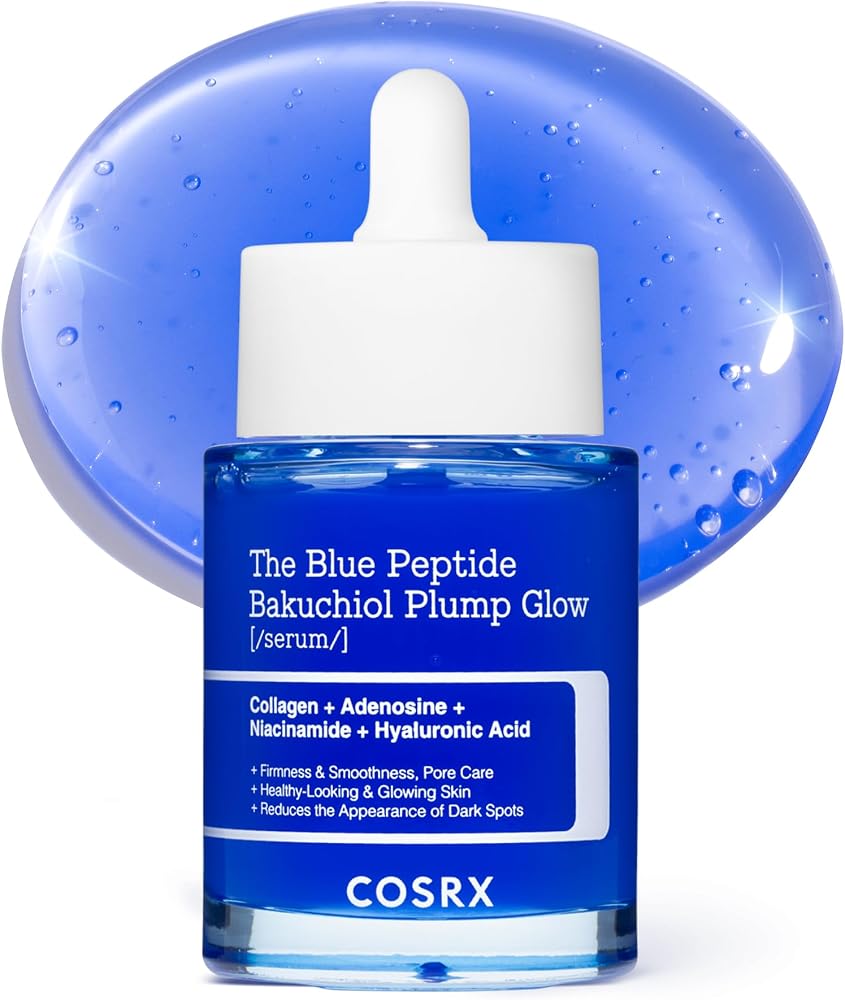
COSRX
The Blue Copper Peptide Bakuchiol Serum
50ml
Copper peptides with bakuchiol · Lightweight, layerable texture

COSRX
The Blue Copper Peptide Bakuchiol Cream
50ml
Copper peptides with bakuchiol · Cushioned cream finish
We're onboarding retail partners for this product.
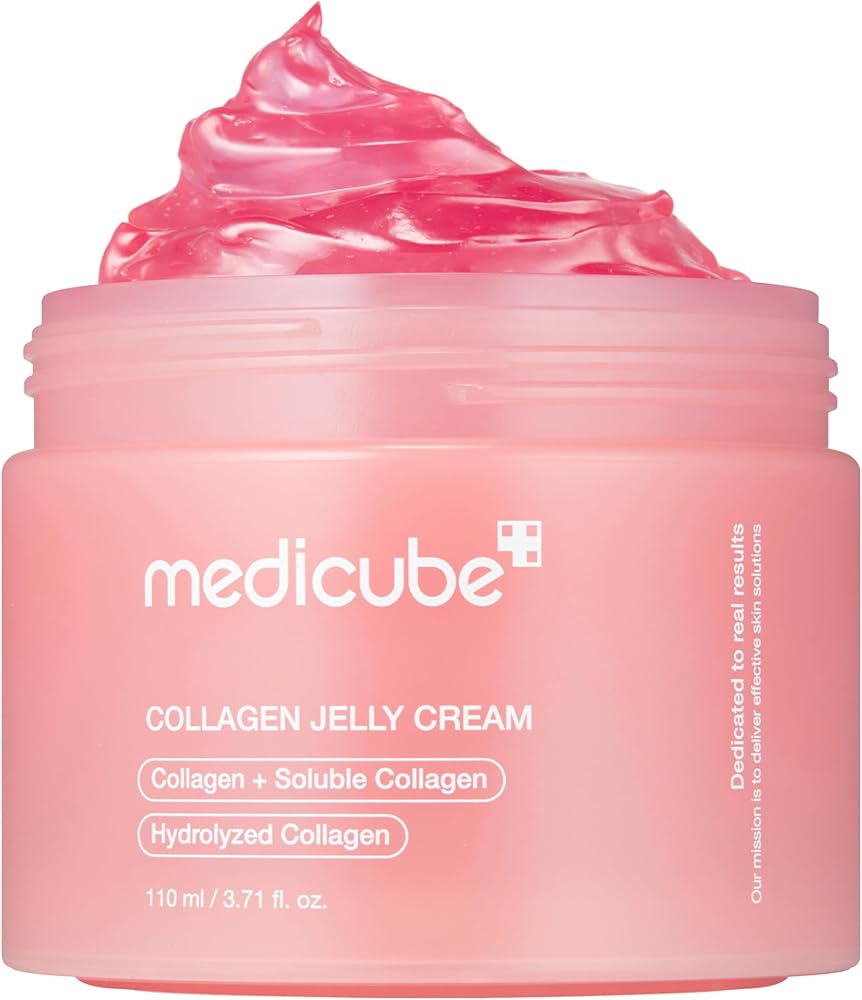
Medicube
Collagen and Niacinamide Jelly Cream
110ml
Jelly texture, fast absorbing · Collagen with niacinamide
We're onboarding retail partners for this product.

Biodance
Collagen Gel Toner Pads
60pads
Pre-soaked gel pads · Hydrating toner step
We're onboarding retail partners for this product.
Keep exploring
Treatments and rituals to read next
- Microneedling (collagen induction)
A device passes very fine needles through the skin at a controlled depth to create tiny channels.
- Professional chemical peel
A controlled acid solution is applied by a professional to exfoliate the surface layers more deeply than a home product.
- RF microneedling
Microneedling combined with radiofrequency energy delivered from the needle tips into the deeper skin.
More from this NOUI Edit
Skin Longevity
The shift from reversing ageing to protecting skin health
Skin Longevity: What Does It Actually Mean for Your Skin?
Skin longevity is one of beauty's biggest shifts in 2026. But is it just a new name for anti-ageing — or is there more to it?
· 8 min read
The Best Skin Longevity Products: NOUI’s Evidence-Led Edit
The skincare industry doesn’t have a shortage of products promising younger-looking skin. But which ones actually deserve a place in a skin-longevity routine?
· 12 min read
Skin Barrier vs Skin Longevity: Why Your Skin Barrier Matters More Than You Think
Before you add another anti-ageing serum to your routine, you might want to ask a more basic question: is your skin barrier actually healthy?
· 10 min read
Snail Mucin: Slime or Skincare Staple?
It sounds strange and it photographs worse. Snail mucin is also one of the better-studied hydrating ingredients to come out of K-beauty — here is what is actually in it, who it suits, and where it goes in a routine.
· 6 min read
You may also like
Peptides in Skincare: What Do They Actually Do?
Peptides are everywhere in skincare right now. But what are they actually doing for your skin — and are they worth paying more for?
· 9 min read
Copper Peptides (GHK-Cu): What Does the Evidence Actually Say?
Copper peptides are having a major moment in skincare. But behind the futuristic packaging and "skin regeneration" claims, what does the science actually tell us?
· 10 min read
Retinol vs Peptides: Which Is Better for Your Skin?
Two of the biggest names in modern anti-ageing skincare — but should you choose retinol or peptides? We compare the evidence, the irritation risk and whether you need both.
· 10 min read
Skin Longevity: What Does It Actually Mean for Your Skin?
Skin longevity is one of beauty's biggest shifts in 2026. But is it just a new name for anti-ageing — or is there more to it?
· 8 min read
The Best Skin Longevity Products: NOUI’s Evidence-Led Edit
The skincare industry doesn’t have a shortage of products promising younger-looking skin. But which ones actually deserve a place in a skin-longevity routine?
· 12 min read
The Best Ingredients for Skin Longevity: What Actually Deserves a Place in Your Routine?
Skin longevity is becoming one of the biggest ideas in beauty. But which skincare ingredients are actually worth your time — and your money?
· 12 min read
Brands in this piece