PDRN, Exosomes & Peptides: What’s the Difference?
Three of the biggest names in next-generation skincare — but PDRN, exosomes and peptides are very different technologies.
Noui Collective · · 11 min read
If you’ve been following skin longevity, regenerative aesthetics or advanced skincare recently, you’ve probably seen the same words appearing everywhere: It sits inside our Skin Longevity Edit, which starts with the pillar guide to what skin longevity actually means.
PDRN.
Exosomes.
Peptides.
They’re being associated with skin regeneration, collagen, repair, hydration and anti-ageing.
But what actually are they?
Are they interchangeable?
And are the expensive products using them really as revolutionary as the marketing suggests?
Let’s break down the science.
The quick answer
PDRN, exosomes and peptides all belong to the wider world of advanced skincare and regenerative research.
But they aren’t the same thing.
Compare
PDRN
Exosomes
Peptides
- What is it?
- PDRNDNA-derived nucleotide fragments
- ExosomesExtracellular vesicles released by cells
- PeptidesShort chains of amino acids
- Main research interest
- PDRNTissue repair and regeneration
- ExosomesCell-to-cell signalling
- PeptidesSignalling and skin structure
- Skincare evidence
- PDRNEmerging
- ExosomesVery early / emerging
- PeptidesVaries by peptide
- Used medically?
- PDRNYes, in some markets and applications
- ExosomesHighly regulated or experimental depending on use
- PeptidesPrimarily cosmetic skincare
- Evidence quality
- PDRNDeveloping
- ExosomesLimited for cosmetic use
- PeptidesHighly variable
- Hype level
- PDRNHigh
- ExosomesVery high
- PeptidesModerate
The important point?
None of these should be treated as one giant category called “regenerative skincare”.
The science behind each is different.
What is PDRN?
PDRN stands for polydeoxyribonucleotide.
It’s essentially a mixture of DNA fragments of varying lengths.
PDRN has been investigated extensively in regenerative medicine and wound-healing contexts, particularly in relation to tissue repair.
Its biological effects are thought to involve pathways associated with tissue regeneration, including the adenosine A2A receptor pathway and processes involved in angiogenesis and wound healing.
This is one reason PDRN has become so interesting in aesthetics.
But there’s an important distinction between:
PDRN used in a medical or clinical context
and
a cosmetic serum that contains a PDRN-like ingredient.
Those are not automatically equivalent.
What does PDRN supposedly do for skin?
Research into PDRN has explored effects associated with:
- Tissue repair
- Inflammation
- Angiogenesis
- Fibroblast activity
- Collagen-related processes
- Wound healing
There is legitimate scientific interest here.
But the route of administration matters enormously.
Some of the strongest research around PDRN relates to medical applications, including wound healing and tissue repair.
That doesn’t mean applying a PDRN serum to your face produces the same result.
The skin barrier remains an important consideration.
What is PDRN made from?
Historically, PDRN has commonly been associated with DNA extracted from salmon or trout sources.
This is one reason you may see Korean skincare products marketed around:
salmon DNA
or
salmon PDRN.
The terminology can be confusing because marketing language isn’t always consistent.
A product calling itself “salmon DNA skincare” isn’t necessarily telling you enough about its actual formulation.
As always, check the ingredient list and the manufacturer’s information.
What are exosomes?
Exosomes are a completely different biological concept.
They’re tiny extracellular vesicles released by cells.
Think of them as microscopic packages involved in cell-to-cell communication.
They can contain biological molecules including proteins, lipids and nucleic acids.
Researchers are investigating their role in communication between cells and their potential applications in regenerative medicine.
This is an extremely exciting area of research.
It’s also an area where consumers should be particularly careful.
Why are exosomes suddenly everywhere?
Because the concept sounds almost futuristic.
Instead of simply applying an ingredient to your skin, the idea is that these tiny vesicles could potentially influence cellular behaviour through the biological signals they carry.
That has created huge interest in:
- Regenerative medicine
- Wound healing
- Hair research
- Dermatology
- Aesthetic medicine
- Skin rejuvenation
But the commercial skincare market has moved much faster than the clinical evidence.
And that’s where the distinction between research and marketing becomes critical.
Are exosomes proven to rejuvenate skin?
Not to the extent that social media marketing might make you think.
There is growing research investigating extracellular vesicles and exosome-based approaches in dermatology and regenerative medicine.
Some early studies have reported potentially interesting effects on skin repair, inflammation, pigmentation, wound healing and signs of ageing.
But the evidence is still developing.
There are major variables between studies, including:
- Source of the exosomes
- How they’re isolated
- Purification
- Concentration
- Storage
- Delivery method
- Whether they’re used alone or alongside another treatment
- Patient population
- Study design
So saying:
“Exosomes regenerate your skin”
is a much bigger claim than the current evidence supports.
The biggest problem with commercial exosome products
This is probably the most important thing to understand.
“Exosome” is not a guarantee of a standardised product.
Different products can contain very different extracellular vesicle preparations.
The source and manufacturing process can matter enormously.
A product described as an “exosome serum” may not be directly comparable with the material used in a clinical research study.
This is why Noui would never recommend choosing an advanced skincare product based solely on the most futuristic ingredient name.
What are peptides again?
Peptides are much simpler to define.
They’re short chains of amino acids.
But there are many different cosmetic peptides, and they don’t all have the same proposed function.
Some are designed as:
Signal peptides
These are investigated for their potential effects on processes associated with the extracellular matrix and structural proteins.
Carrier peptides
These can bind or transport certain substances and have been investigated in cosmetic formulations.
Other functional peptides
Different peptides have been developed for different cosmetic purposes.
This means:
“peptides” isn’t one ingredient.
It’s a huge family.
Which has the strongest evidence?
This is where the Noui evidence-first approach becomes useful.
Peptides
Evidence: 🟡 Variable
Some individual peptides have human studies behind them.
Others have much less evidence.
The category cannot be treated as one uniform ingredient.
PDRN
Evidence: 🟡 Emerging
There is meaningful scientific and clinical interest, particularly around regenerative and wound-healing applications.
But evidence for topical cosmetic PDRN is less established than the broader medical research might suggest.
Exosomes
Evidence: 🟠 Early/emerging for cosmetic skincare
The underlying science is fascinating.
Human research is growing.
But there are still significant questions around standardisation, manufacturing, delivery and long-term safety depending on the application.
And commercial claims can run far ahead of the evidence.
So which one is “best”?
There isn’t a scientifically defensible universal winner.
It depends on what you’re trying to achieve and what evidence you’re willing to accept.
If you’re looking for a conventional cosmetic routine with established ingredients, you don’t necessarily need any of them.
If you’re interested in cutting-edge skin-longevity technology, they are certainly areas worth watching.
But:
Interesting ≠ proven.
And:
Expensive ≠ effective.
Products worth exploring
From the Noui catalogue, matched to what this guide covers. Prices come from our live retailer comparison.


Anua
PDRN Hyaluronic Acid 100 Moisturizing Cream
60ml · 4.5★ (900)
Targets compromised barrier and dullness
PDRN vs exosomes vs peptides
🧬 PDRN
Potential appeal
Research into tissue repair and regenerative processes.
The catch
Much of the interesting evidence comes from medical/clinical contexts rather than ordinary cosmetic serums.
Noui position
Interesting technology with genuine research behind it, but don’t automatically transfer medical evidence to skincare products.
🧫 Exosomes
Potential appeal
Cell-to-cell signalling and regenerative research.
The catch
Commercial products can vary enormously, and the clinical evidence for cosmetic applications is still developing.
Noui position
One of the most exciting areas of research — and one of the areas where consumers should be most sceptical of marketing claims.
🧪 Peptides
Potential appeal
Specific peptides can be designed around particular cosmetic functions.
The catch
There are hundreds of peptides and evidence varies dramatically between them.
Noui position
The most established of these three as a mainstream cosmetic skincare category, but individual ingredients need to be assessed on their own evidence.
Can you use them together?
Potentially.
But this is where skincare can become unnecessarily complicated.
A brand might sell a product containing:
PDRN + exosomes + peptides + growth factors + antioxidants + ten other actives
and make it sound as though you’ve discovered the fountain of youth.
You haven’t.
More ingredients don’t automatically mean more results.
In fact, adding more ingredients can make it harder to understand:
- What’s actually working
- What’s irritating your skin
- Which ingredient you’re paying for
- Whether the product is worth the price
The best routine is usually the one that addresses your goals without unnecessary complexity.
What about combining these with microneedling?
This is where you need to be especially careful.
You may see PDRN or exosome products marketed for use alongside procedures such as:
- Microneedling
- Laser treatments
- Radiofrequency
- Other aesthetic procedures
The fact that something is marketed for use after a procedure doesn’t automatically mean that every formulation is appropriate for application to compromised skin.
A product designed as a cosmetic serum isn’t necessarily sterile or suitable for use on freshly needled or otherwise disrupted skin.
Never assume that because a product contains PDRN or exosomes it is safe to introduce into the skin through a procedure.
For procedural use, follow the advice of a qualified clinician and use products specifically intended and authorised for that purpose.
What about injectable exosomes?
This is an entirely different conversation from buying an exosome skincare serum.
Injectable or otherwise medical uses of exosome products involve different regulatory, safety and clinical considerations.
They should not be treated as equivalent to applying a cosmetic product to intact skin.
This article focuses on skincare and general consumer education rather than injectable or experimental treatments.
Why are Korean skincare brands so interested in PDRN?
Korean beauty has played a major role in bringing PDRN into mainstream consumer awareness.
You’ll now find PDRN appearing in:
- Serums
- Creams
- Masks
- Ampoules
- Eye products
- Skin boosters
- Professional aesthetic treatments
This has helped turn what was once a relatively specialised regenerative ingredient into one of the biggest skincare trends.
But popularity doesn’t automatically tell us how effective a product is.
That’s why the ingredient list is only the beginning of the investigation.
What should you look for when buying these products?
Before spending £100 or more on an advanced “regenerative” serum, ask:
What exactly is in it?
Don’t rely on the front of the packaging.
Check the INCI ingredient list.
What evidence exists?
Is there human research?
Is it on the ingredient?
Or the exact finished product?
How was it formulated?
With advanced ingredients, stability and delivery can be important.
What exactly is the claim?
“Supports skin hydration” is very different from:
“Regenerates your skin.”
Is the price justified?
A futuristic ingredient name doesn’t automatically justify a futuristic price.
Is it actually necessary?
Before buying the newest regenerative serum, ask whether your routine already covers the basics:
SPF → barrier support → evidence-backed actives → consistency.
The Noui evidence ladder
This is the same framework we use throughout the Skin Longevity Edit.
The Noui evidence ladder
Evidence becomes more meaningful as you climb — laboratory findings are interesting, replicated human results are convincing.
Laboratory research
Interesting biological activity. Not proof of consumer benefit.
Preclinical research
Promising findings before human testing. Still not proof in humans.
Human clinical research
The ingredient or treatment has been studied in people. Much more meaningful.
Strong replicated evidence
Multiple well-designed human studies consistently demonstrate meaningful benefits. This is where confidence becomes strongest.
And there’s another question:
🧴 Does the evidence relate to the exact product?
Because that’s the step marketing often skips.
So what’s the future of skin longevity?
This is where things get exciting.
PDRN, extracellular vesicles, peptides and other regenerative technologies could become increasingly important in dermatology and aesthetics.
But we’re still learning.
And that’s exactly why consumers should be interested without automatically believing every claim.
The next generation of skincare may be incredibly sophisticated.
But the science needs time to catch up with the marketing.
Noui verdict
🥇 Most established mainstream cosmetic category:
Peptides
🧬 Most interesting regenerative ingredient:
PDRN
🧫 Most futuristic:
Exosomes
🔬 Most important question:
What does the human evidence actually show?
💰 Most important buying rule:
Don’t pay a premium for a claim that hasn’t been demonstrated.
PDRN, exosomes and peptides represent some of the most interesting developments in modern skin science.
But they’re not interchangeable.
And none of them should automatically be treated as a miracle solution for ageing skin.
The smartest approach is to stay curious, follow the research and keep asking the question that sits at the heart of Noui:
“What does the evidence actually say?”
This article is for general information and is not medical advice. Skincare ingredients affect people differently — if you have a skin condition, are pregnant or are unsure whether something suits you, speak to a GP, pharmacist or dermatologist.
From the Noui catalogue
Explore relevant products
Matched to what this guide covers. Prices come from our live retailer comparison, not from this article.
Anua
PDRN Hyaluronic Acid 100 Moisturizing Cream
60ml · 4.5★ (900)
Targets compromised barrier and dullness
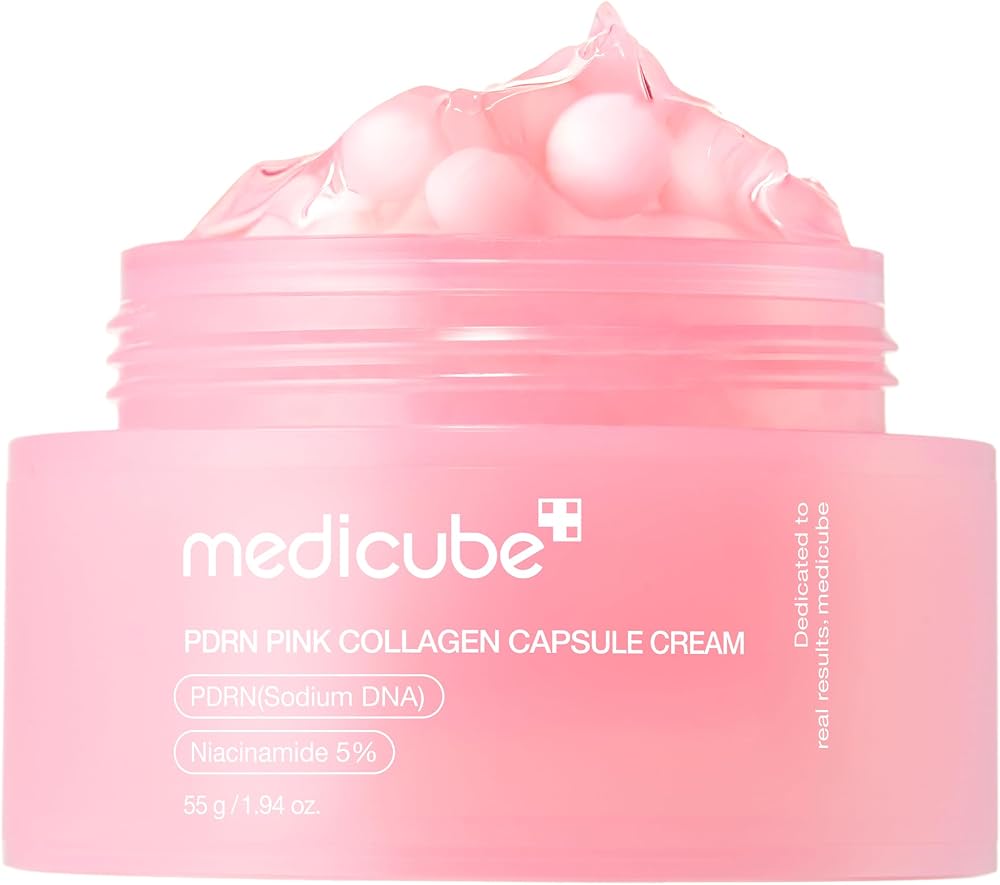
Medicube
Capsule Cream with Salmon DNA PDRN Pink Collagen
55ml · 4.4★ (1,800)
Targets fine lines and dullness · formulated with niacinamide


The Ordinary
Retinol 0.2% in Squalane
30ml
Targets fine lines and visible signs of ageing · formulated with retinol

COSRX
The Retinol 0.1 Cream
20ml
Targets fine lines and visible signs of ageing · formulated with retinol
Keep exploring
Treatments and rituals to read next
- Microneedling (collagen induction)
A device passes very fine needles through the skin at a controlled depth to create tiny channels.
- RF microneedling
Microneedling combined with radiofrequency energy delivered from the needle tips into the deeper skin.
- Morpheus8
A branded radiofrequency microneedling device that delivers heat deeper into the skin through insulated needles.
More from this Noui Edit
Skin Longevity
The shift from reversing ageing to protecting skin health
Skin Longevity: What Does It Actually Mean for Your Skin?
Skin longevity is one of beauty's biggest shifts in 2026. But is it just a new name for anti-ageing — or is there more to it?
· 8 min read
The Best Ingredients for Skin Longevity: What Actually Deserves a Place in Your Routine?
Skin longevity is becoming one of the biggest ideas in beauty. But which skincare ingredients are actually worth your time — and your money?
· 12 min read
Skincare for Rosacea-Prone Skin: What Helps, What Hurts
Rosacea is a medical condition, and treating it is a job for a clinician. Your routine still matters. Here is what the evidence supports for skin that flushes, stings and reacts.
· 8 min read

Sleep and Skin Barrier Repair: Why Rest Is Part of Your Routine
Barrier repair runs overnight. What sleep research supports for skin, and how to make the hours you already have count for more.
· 7 min read
You may also like
Skin Longevity: What Does It Actually Mean for Your Skin?
Skin longevity is one of beauty's biggest shifts in 2026. But is it just a new name for anti-ageing — or is there more to it?
· 8 min read
Skin Longevity vs Anti-Ageing: What's the Difference?
Anti-ageing skincare has been around for decades. So why is everyone suddenly talking about skin longevity — and is it actually different?
· 8 min read
Peptides in Skincare: What Do They Actually Do?
Peptides are everywhere in skincare right now. But what are they actually doing for your skin — and are they worth paying more for?
· 9 min read
Copper Peptides (GHK-Cu): What Does the Evidence Actually Say?
Copper peptides are having a major moment in skincare. But behind the futuristic packaging and "skin regeneration" claims, what does the science actually tell us?
· 10 min read
Retinol vs Peptides: Which Is Better for Your Skin?
Two of the biggest names in modern anti-ageing skincare — but should you choose retinol or peptides? We compare the evidence, the irritation risk and whether you need both.
· 10 min read
The Best Ingredients for Skin Longevity: What Actually Deserves a Place in Your Routine?
Skin longevity is becoming one of the biggest ideas in beauty. But which skincare ingredients are actually worth your time — and your money?
· 12 min read