The Science of Scent and Mood: How Aromatherapy Actually Affects the Brain
Scent takes a more direct route to the brain's emotional centre than any other sense. Here is the actual mechanism behind it — and what it means for your routine.
Noui Collective · · 7 min read
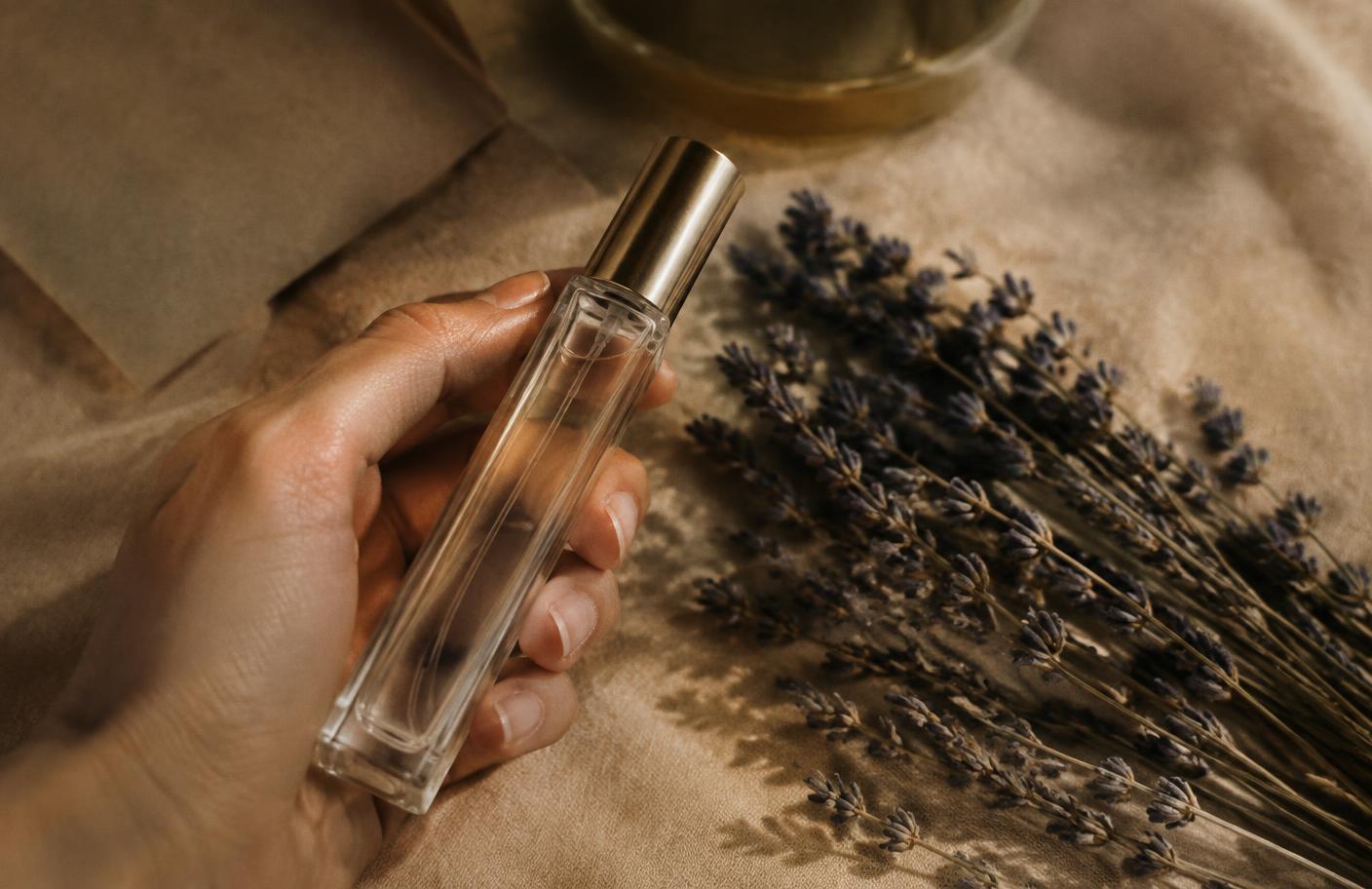
Of all the senses, scent is the only one with a near-direct route to the brain's emotional and memory centres. Sight, sound and touch are relayed through the thalamus before they reach the areas that handle feeling and memory. Olfaction largely skips that step: signals travel from the nose to the olfactory bulb and on to the amygdala and hippocampus in very few synapses. That is the mechanical reason a smell can trigger a memory or a mood shift almost instantly, in a way a photograph or a song rarely does.
That anatomy is well established. What people do with it is where the overclaiming starts.
This is general wellbeing information, not medical advice. Essential oils are potent and can irritate skin, trigger asthma, and are not all safe in pregnancy or around pets and young children. Dilute properly, ventilate the room, and never take oils internally without professional guidance.
The mechanism, in plain terms
Odour molecules bind to receptors high in the nose. Those receptors feed the olfactory bulb, which connects directly into the limbic system — the amygdala, which handles emotional salience, and the hippocampus, which handles memory. Because emotion and memory are processed almost at the point of entry, scent arrives *already felt*.
Neurobiological reviews of affective processing describe this as olfaction's defining feature: a very short path to the amygdala that bypasses the thalamic relay every other sense uses. It explains the speed and the stickiness of scent-linked memories.
What the research does and does not support
Reasonably supported: inhaled scent can shift *self-reported* anxiety and mood in the short term. Lavender is the most studied example. Systematic reviews of lavender inhalation for anxiety report consistent reductions in anxiety scores across a range of settings, and some randomised trials in pre-surgical patients have reported lower anxiety alongside reduced cortisol.
Less certain: whether particular oils have specific, reliable physiological effects across people, and whether those effects last beyond the exposure. Many studies are small, hard to blind — you can tell whether a room smells of lavender — and use different concentrations and delivery methods. Treat "commonly studied" as the honest phrase, not "clinically proven".
Not supported: claims that scent treats depression, anxiety disorders, hormonal conditions or infections.
The Noui evidence ladder
Evidence becomes more meaningful as you climb — laboratory findings are interesting, replicated human results are convincing.
Products worth exploring
From the Noui catalogue, matched to what this guide covers. Prices come from our live retailer comparison.


CurrentBody
CurrentBody Skin LED Light Therapy Mask Series 2
· 4.4★ (138)
Targets visible signs of ageing and breakouts
The part you can actually use: scent anchoring
The most useful application is not a particular oil. It is association. Because scent is processed alongside memory, a smell that repeatedly accompanies a calm moment becomes a cue for that state — the same learning process that makes a hotel shampoo smell like a holiday.
To use it deliberately:
- Choose one scent for one purpose. One for winding down, at most one for focus.
- Pair it with the same act every time: the last twenty minutes before bed, the first ten minutes of work.
- Keep it out of the rest of the day so the association stays specific.
- Give it two or three weeks. Anchoring is learned, not instant.
This is also why the cheap option often works as well as the expensive one. The brain is learning the pairing, not the price.
Where more scent stops helping
Layered candles, a diffuser, scented laundry and perfume in the same room do not compound into more calm. Competing scents raise the overall sensory load and can tip into headache and irritability, which is the opposite of the intent. That balance point is covered in when more input is not better.
Practical caution matters too: ventilate, avoid neat oils on skin, and skip diffusing around people with asthma, infants or pets unless you have checked what is safe.
Coming next
Take it further
Scent works best paired with one other sense. [Building a full scent ritual](/blog/scent-led-wellness-rituals) · [The wider practice: sensory wellness](/blog/sensory-wellness-complete-guide)
Frequently asked questions
Does aromatherapy actually work?
For short-term, self-reported calm, there is reasonable evidence that inhaled scent helps, with lavender the most studied. For treating diagnosed conditions, there is not. The most reliable benefit is association: a scent tied consistently to a calm routine becomes a cue for that state.
Why does smell trigger memories so strongly?
Because olfactory signals reach the amygdala and hippocampus — emotion and memory — in very few steps, without the thalamic relay other senses pass through. Emotion is attached almost at the point of perception.
Which scent is best for anxiety?
Lavender has the most published research, but preference matters more than the label. A scent you find unpleasant will not calm you regardless of what a study says. Choose one you like and use it consistently.
Are essential oils safe to use every day?
Inhaled at low concentration in a ventilated room, most people tolerate them well. Undiluted skin contact, internal use, and use around asthma, pregnancy, infants and pets need proper caution and, where relevant, professional advice.
From the Noui catalogue
Explore relevant products
Matched to what this guide covers. Prices come from our live retailer comparison, not from this article.
CurrentBody
CurrentBody Skin LED Light Therapy Mask Series 2
· 4.4★ (138)
Targets visible signs of ageing and breakouts



Keep exploring
Treatments and rituals to read next
- Reflexology
A structured pressure massage of the feet, and sometimes hands and ears, based on the traditional idea that areas of the foot map to the body.
- LED light therapy (in clinic)
Sessions under a professional LED panel using red, blue or near-infrared wavelengths, often added to a facial.
- At-home LED mask
A wearable mask or panel that delivers lower-intensity LED light in short sessions at home.
More from this Noui Edit
Sensory Wellness
Scent, sound, touch and sight as pathways into the nervous system
More guides in this Edit are in production — the cluster page lists what is coming next.
Explore the Sensory Wellness EditYou may also like

Cortisol Face: What's Real and What's Exaggerated
Stress does affect skin. "Cortisol face" as a diagnosis you can spot in a selfie is a social-media invention. Here is the line between the two.
· 7 min read
Skincare for Rosacea-Prone Skin: What Helps, What Hurts
Rosacea is a medical condition, and treating it is a job for a clinician. Your routine still matters. Here is what the evidence supports for skin that flushes, stings and reacts.
· 8 min read
Gua Sha vs Facial Lymphatic Drainage: What is the Difference?
Gua sha and facial lymphatic drainage are often mentioned together, but they are not the same technique. Here is what each one does, how they differ and which may help with puffiness.
· 6 min read
Peptides in Skincare: What Do They Actually Do?
Peptides are everywhere in skincare right now. But what are they actually doing for your skin — and are they worth paying more for?
· 9 min read
Skin Longevity: What Does It Actually Mean for Your Skin?
Skin longevity is one of beauty's biggest shifts in 2026. But is it just a new name for anti-ageing — or is there more to it?
· 8 min read
The Gut-Skin Axis, Fact-Checked
The gut and skin do communicate. That does not mean your breakouts are a leaky gut, or that a probiotic is a skincare step.
· 8 min read