The Ultimate Guide to Dry Brushing: Benefits, Technique, and What Actually Works
Dry brushing is a genuinely pleasant, mildly exfoliating ritual with a long history — and a marketing story that has run far ahead of the evidence. Here is the honest version: what it does, what it does not, and how to do it properly.
Noui Collective · · 9 min read
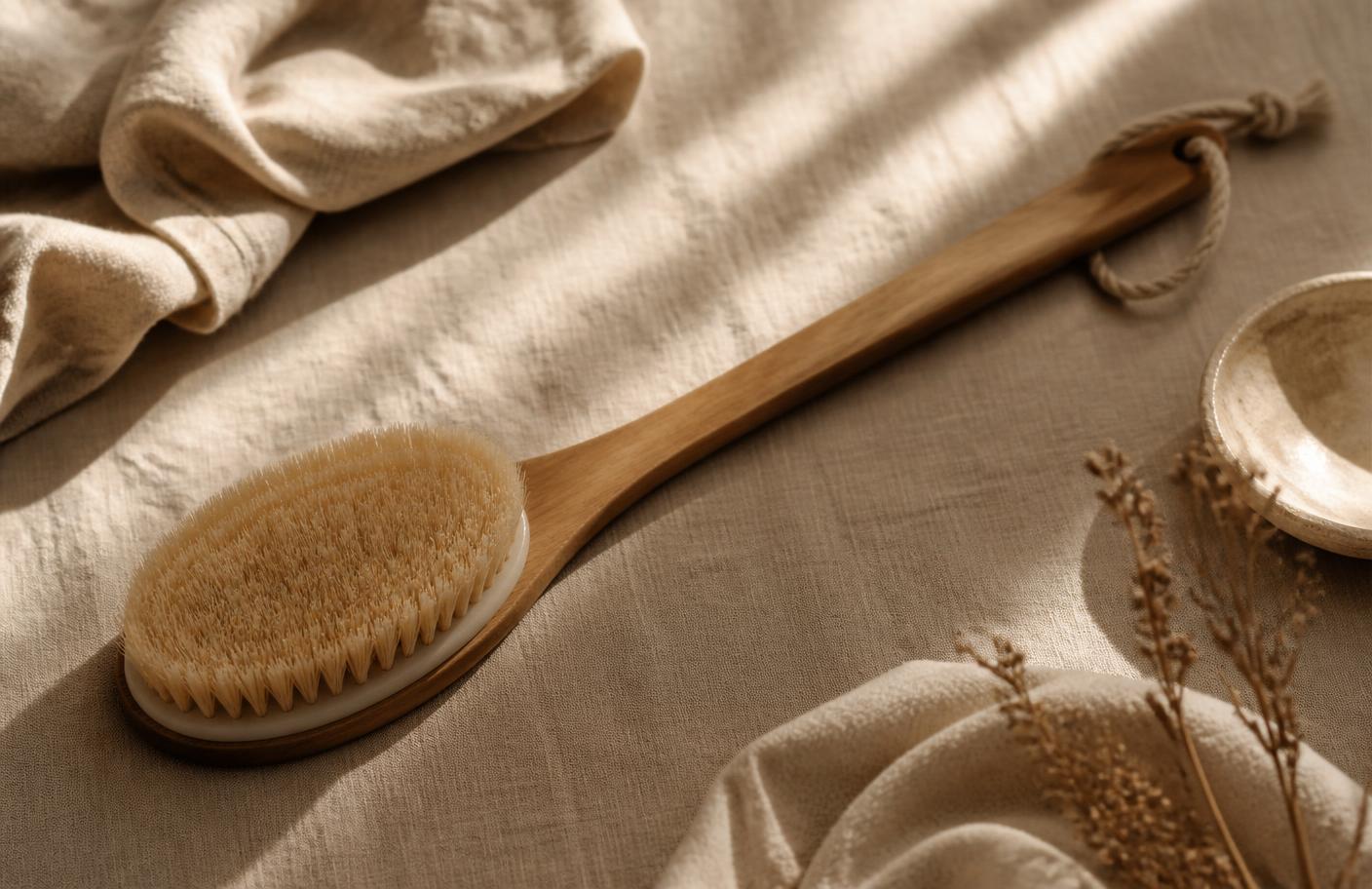
Dry brushing is one of the oldest body care rituals still in regular use. In Ayurvedic practice it appears as *garshana*, a dry massage traditionally done with raw silk or linen gloves before bathing and oiling the body. Nordic and Central European bathing culture arrived at something similar with stiff-bristled brushes. What changed recently is not the practice but the claims attached to it: somewhere between the spa treatment room and the algorithm, a five-minute brushing habit was rebranded as a way to release toxins, drain the lymphatic system and remove cellulite.
The practice deserves better than that, because it does not need the exaggeration. Brushing dry skin with a bristle brush is mildly exfoliating, briefly stimulating, and for a lot of people genuinely enjoyable — a few quiet minutes before a shower that makes body care feel deliberate rather than rushed. Those are real, modest benefits. They are also the ones with the least marketing behind them.
This guide is general information about a body care ritual, not medical advice. If you have eczema, psoriasis, rosacea on the body, varicose veins, a bleeding or clotting condition, lymphoedema, diabetes-related skin changes, or any broken or infected skin, ask a doctor or dermatologist before brushing.
In this guide
- How to Body Brush: Step-by-Step Technique for Beginners
- Dry Brushing Benefits: What's Backed by Evidence (and What Isn't)
- Dry Brushing vs. Body Brushing: Is There a Difference?
- Best Time to Dry Brush: Morning, Before Shower, or Before Bed?
- Does Dry Brushing Really Help Cellulite? The Honest Answer
- How to Choose a Body Brush: Bristle Type, Handle, and Material Guide
- Lymphatic Drainage 101: How Dry Brushing Fits In
- Dry Brushing for Sensitive Skin: Is It Safe?
- What to Do After Dry Brushing: Building the Full Ritual
- Dry Brushing by Season: Adjusting Your Routine for Weather and Climate
What dry brushing actually is
Dry brushing means exactly what it says: brushing bare, dry skin with a firm brush, usually before a shower or bath, with no water, oil or product involved. Strokes typically start at the feet and hands and move upwards towards the heart, with lighter, circular movements over the stomach and back. A session takes three to five minutes. Afterwards you rinse, then moisturise.
That is the whole practice. Nothing about it is technical, which is part of its appeal — and part of why the claims around it have been able to grow unchecked.
What it plausibly does
It exfoliates, gently. Stiff bristles lift loose surface skin cells. That is why skin can feel smoother straight afterwards and why body cream sinks in more evenly on brushed skin. It is mechanical exfoliation, in the same family as a body scrub or a rough flannel, and like any mechanical exfoliation it is easy to overdo.
It flushes the skin temporarily. The pink glow after brushing is a short-lived increase in surface blood flow, caused by friction. It fades within an hour or so. It is a real physical response, but it is not the same thing as improved circulation in any lasting, measurable sense.
It feels good, and that matters. Firm, rhythmic touch on the skin is calming for many people, in a similar way to massage. A ritual that makes you slow down for four minutes before a shower, and then moisturise properly afterwards, tends to improve how your skin looks — largely because of the moisturising and the consistency rather than the brush.
It helps products work better. Removing loose surface flakes gives oils and creams a smoother surface to sit on. This is the least glamorous benefit and probably the most reliable one.
What it does not do
It does not remove toxins. Your liver and kidneys handle that. Skin is not a filtration organ, and brushing it does not eliminate anything except dead surface cells. "Detox" language around dry brushing is marketing, not physiology.
It does not remove cellulite. Brushing can temporarily plump and flush the skin so texture looks slightly smoother for an hour or two. Cellulite is a structural feature of how fat, connective tissue and skin are arranged, present in most women regardless of weight or fitness, and no brush changes that structure. The full honest answer is worth reading if you have seen before-and-after claims.
It does not "drain" your lymphatic system in the clinical sense. The lymphatic system does move fluid, and it does respond to movement, muscle contraction and breathing. Manual lymphatic drainage as practised in clinical settings is a specific, very light technique used for specific conditions. A brisk bristle brush on dry skin is not that treatment, and calling it one overstates it. There is a longer explanation here.
It does not fix body texture on its own. Keratosis pilaris, body acne and rough patches usually respond better to gentle chemical exfoliation and consistent moisturising than to more vigorous brushing, which can inflame them.
Key takeaways
- Reliable: mild exfoliation, smoother product application, a short-lived skin flush, a ritual that people enjoy and stick to.
- Unsupported: toxin removal, cellulite reduction, lasting circulatory change, clinical lymphatic drainage.
- The moisturiser you apply afterwards is doing more visible work than the brush.
Products worth exploring
From the Noui catalogue, matched to what this guide covers. Prices come from our live retailer comparison.

CeraVe
SA Smoothing Cream
Targets keratosis pilaris (rough bumps) and bumpy texture · formulated with salicylic acid and hyaluronic acid · fragrance-free

First Aid Beauty
KP Bump Eraser Body Scrub 10% AHA
Targets texture and keratosis pilaris (rough bumps) · formulated with glycolic acid and salicylic acid
The short version of the technique
Full detail is in the step-by-step guide, but the essentials are:
- Brush on completely dry skin, before showering.
- Long strokes from feet and hands towards the heart; lighter circles on stomach and back.
- Light pressure. Skin should look faintly pink, never scratched, red or sore.
- Three to five minutes total, two or three times a week to start.
- Avoid the face, broken skin, sunburn, rashes, moles and varicose veins.
- Rinse, pat dry, then moisturise while skin is still slightly damp.
Frequency is where most people go wrong. Daily brushing suits some skin and irritates plenty of it. Twice a week is a sensible starting point, and if your skin looks better on that than on daily, that is your answer.
Choosing a brush without overthinking it
A brush needs firm bristles, a comfortable grip and a shape you will actually reach for. Natural bristles are traditional and slightly stiffer; good synthetic bristles are a reasonable vegan alternative and easier to keep dry. Long handles help with backs and calves; hand-held pads give you more control over pressure. Softer bristles are the sensible default if your skin flushes easily. The bristle and handle guide covers the trade-offs, and the body care edit has the oils and creams worth using afterwards.
Where it fits in a wider routine
Dry brushing works best as a small part of a body care routine, not as the centre of it. Exfoliation two or three times a week, moisturising daily, sun protection on exposed skin, and gentler cleansing do far more for how body skin looks than any brushing schedule. If you want a routine built around your own skin rather than a general template, the body analysis asks about texture, dryness, sensitivity and concerns and suggests products from that.
Coming next
Build the ritual properly
Start with the technique, then pair it with the right post-brush oils and creams. [How to body brush](/blog/how-to-body-brush) · [What to do after brushing](/blog/after-dry-brushing-routine)
Frequently asked questions
How often should you dry brush?
Two to three times a week suits most people. Daily brushing is fine for resilient skin that shows no irritation, but it is not better by default, and dry or sensitive skin usually does better on less. If skin looks red, scratched or feels tight afterwards, reduce the frequency and lighten the pressure before changing anything else.
Does dry brushing help with cellulite?
Not in any lasting way. Brushing can make skin look temporarily smoother because of surface flushing and mild swelling, but cellulite is structural and no brushing routine changes that structure. Anyone promising permanent cellulite removal from a brush is overselling.
Should you dry brush before or after a shower?
Before, on dry skin. That is the point of the practice — bristles on damp skin drag rather than lift loose cells, and the shower afterwards rinses away what you have loosened. Moisturiser goes on after the shower.
Is dry brushing safe for sensitive skin?
Often, with adjustments: a softer brush, lighter pressure, once a week, and a rich fragrance-free moisturiser afterwards. Skip it entirely on active eczema or psoriasis, broken skin, sunburn or anywhere inflamed, and check with a doctor first if you have a skin condition or circulatory issue.
From the Noui catalogue
Explore relevant products
Matched to what this guide covers. Prices come from our live retailer comparison, not from this article.
CeraVe
SA Smoothing Cream
Targets keratosis pilaris (rough bumps) and bumpy texture · formulated with salicylic acid and hyaluronic acid · fragrance-free
First Aid Beauty
KP Bump Eraser Body Scrub 10% AHA
Targets texture and keratosis pilaris (rough bumps) · formulated with glycolic acid and salicylic acid


Anua
PDRN Hyaluronic Acid 100 Moisturizing Cream
60ml · 4.5★ (900)
Targets dullness and compromised barrier

Olay
Firming Collagen Hydrating Body Lotion
Targets firmness and tone · formulated with guarana and glycerin

Dove
Pro-Retinol + Peptide Firming Body Serum
Targets texture and firmness and tone · formulated with guarana and peptides
Keep exploring
Treatments and rituals to read next
- LED light therapy (in clinic)
Sessions under a professional LED panel using red, blue or near-infrared wavelengths, often added to a facial.
- Professional chemical peel
A controlled acid solution is applied by a professional to exfoliate the surface layers more deeply than a home product.
- Facial cupping
Small soft silicone cups used with gentle suction and glided across the face, usually over an oil.
More from this Noui Edit
Dry Brushing & Body Care
An old ritual, honestly assessed
More guides in this Edit are in production — the cluster page lists what is coming next.
Explore the Dry Brushing & Body Care EditYou may also like
Where is the cheapest place to buy CeraVe in the UK?
CeraVe pricing varies by more than 30% between retailers. Here is how to track it.
· 4 min read
Lymphatic Drainage Massage: Does It Actually Work?
Lymphatic drainage massage is everywhere — from celebrity facials to at-home tools. Here is what the technique is actually for, what the evidence supports, and which claims to ignore.
· 8 min read
Skin Longevity: What Does It Actually Mean for Your Skin?
Skin longevity is one of beauty's biggest shifts in 2026. But is it just a new name for anti-ageing — or is there more to it?
· 8 min read
Retinol vs Peptides: Which Is Better for Your Skin?
Two of the biggest names in modern anti-ageing skincare — but should you choose retinol or peptides? We compare the evidence, the irritation risk and whether you need both.
· 10 min read
The best full skincare routine under £50
A complete morning and evening routine, barrier-first, for under fifty pounds.
· 6 min read
The best moisturisers for dry, sensitive skin
Barrier-first picks that avoid fragrance, essential oils and unnecessary actives.
· 6 min read