At-home ritual
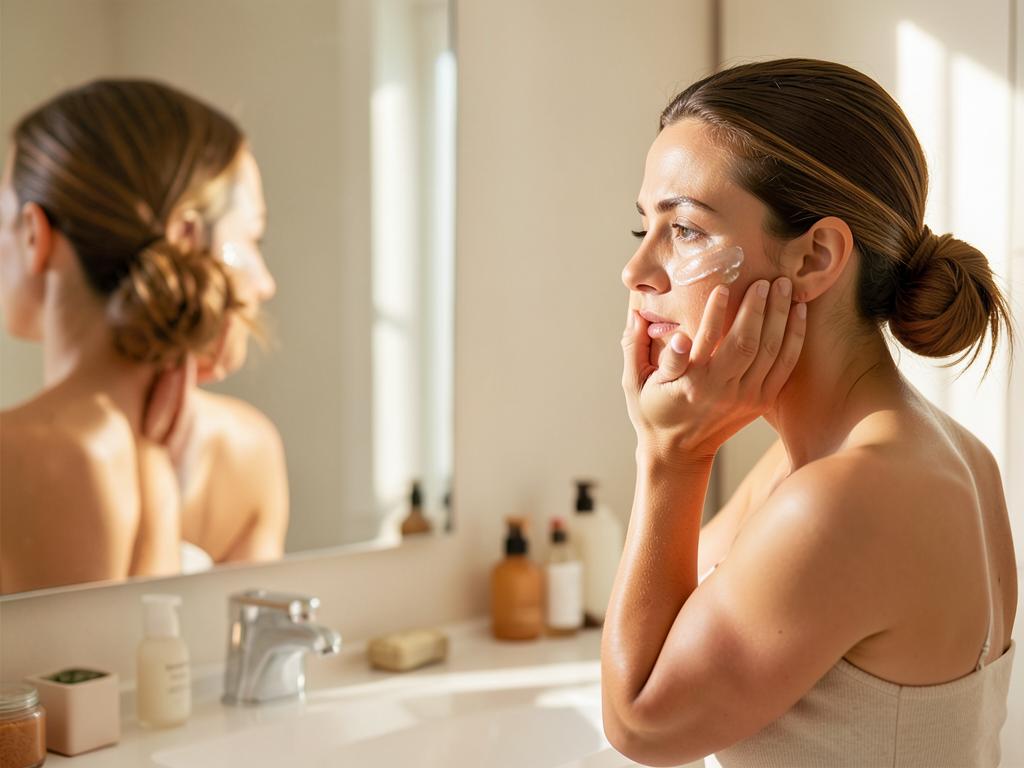
Facial self-massage
A few minutes of slow, upward pressure over cheeks, jaw and brow using your hands and a slip of oil.
Facial massage traditions include Japanese Kobido and Indian marma work. · Global
Indicative cost
Price varies
Where it's done
At home
How long
5 minutes
Intensity
Gentle
Downtime
None
Typical course
Daily or a few times a week
When people notice a change
Temporary, lasting hours
Keeping it up
Ongoing
What it's used for
Used for facial tension, a temporarily less puffy look and simple enjoyment.
How it works
Pressure and movement temporarily move fluid and relax the muscles we clench without noticing.
What a session actually involves
Apply oil or balm, work outward and upward with flat fingers, spend extra time along the jaw.
What people usually consider it for
- Under-eye bags or puffiness
- Stress and calm
- Firmness and tone
This reflects what the treatment is commonly used for — not a claim that it will work for you.
Who tends to find it worthwhile
- — Anyone who clenches their jaw
When it may not be suitable
- Active acne, eczema flare, rosacea flare or any broken skin
This list is not exhaustive. A qualified practitioner should assess you before any treatment.
Things to weigh up
- — Keep pressure light — dragging skin is not the aim.
What the evidence looks like
Any change in contour is a short-term fluid and tension effect, not a structural one.
Products that sit alongside it
- A facial oil or balm you already own
Others people compare it with
Treatments and devices are listed for information only. Nothing here is medical advice, a diagnosis, or a promise of a result. Suitability depends on your health, skin and the specific device or practitioner — always check with a qualified professional first. We don't take bookings or refer you to providers.